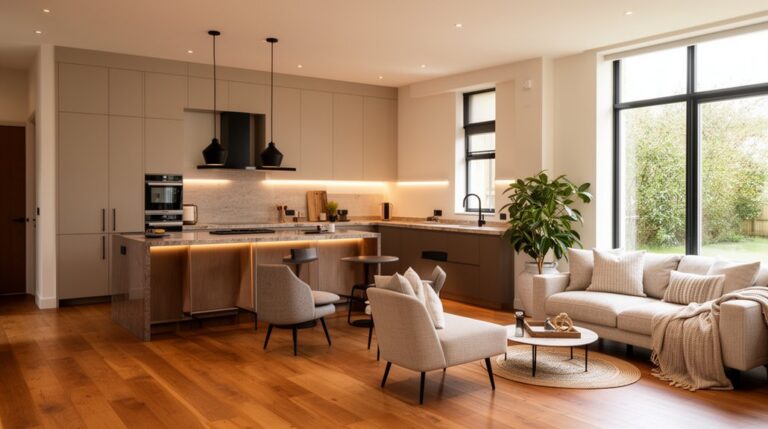
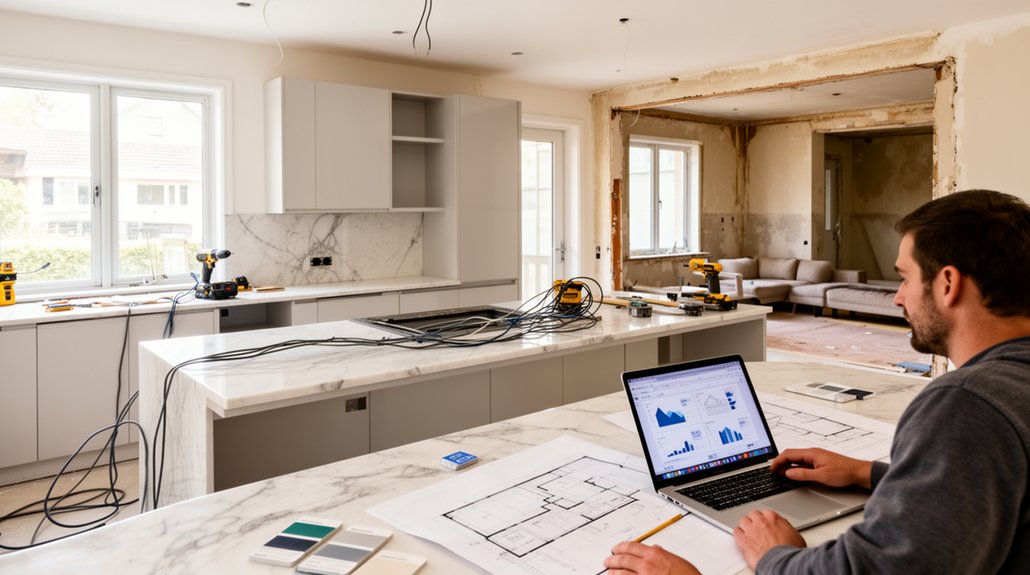
Most investors overestimate the ROI of cosmetic upgrades and underestimate how much hidden defects drag down returns. You should start by identifying what actually limits your property’s income or resale potential, not what looks outdated. Focus on fixes that shift value metrics—rent, vacancy, and buyer demand—before layering in visual appeal. Every dollar needs a measurable outcome, and the order you invest in matters more than the budget itself…
Key Takeaways
- Prioritize renovations with highest ROI, focusing on kitchens, bathrooms, and curb appeal aligned with local market expectations.
- Fix structural, safety, and system issues first to prevent costly future repairs and protect long-term asset value.
- Use comparable sales and rental data to ensure upgrades increase value without overcapitalizing.
- Target improvements that boost tenant demand, such as energy efficiency, storage, and modern finishes, to reduce vacancy and raise rents.
- Sequence renovations efficiently to minimize downtime, control costs, and maintain steady cash flow.
Which Renovations Add the Most Property Value?
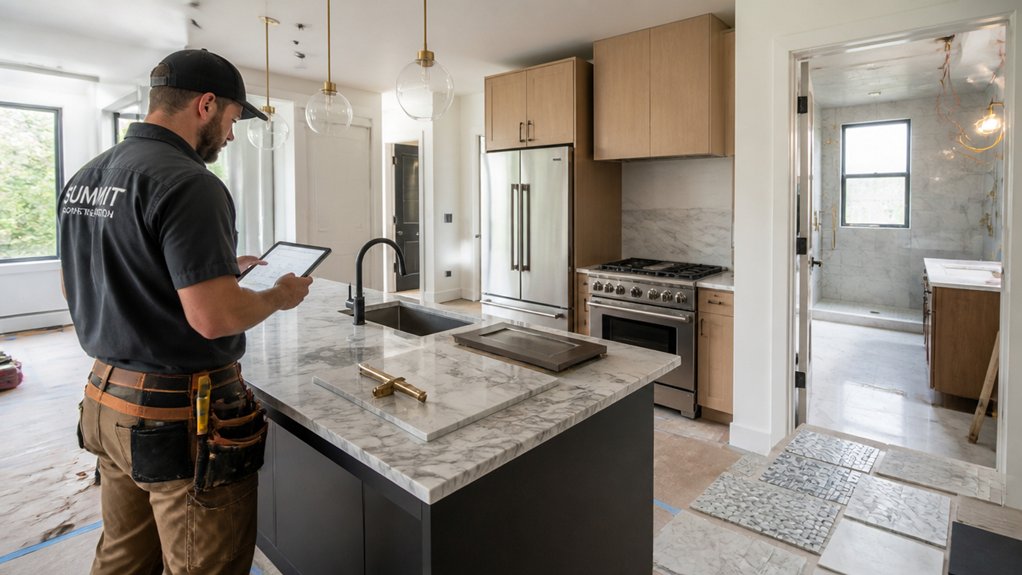
When you’re deciding where to invest, focus on renovations that consistently deliver strong resale returns rather than personal upgrades that don’t translate to market value. You’ll see the highest ROI from kitchens, bathrooms, and curb appeal improvements, where buyers anchor value perceptions and compete within your market segment.
Prioritize mid-range remodels aligned with current Design trends, avoiding overcapitalization while signaling relevance and quality to your target demographic.
Eco-friendly upgrades like efficient windows, insulation, and smart systems cut operating costs and widen buyer appeal, strengthening comparables and appraisal outcomes.
Stick with durable materials, neutral palettes, and functional layouts so your property fits what serious buyers expect and rewards you at resale.
Benchmark local sales data and adjust scope to stay competitive without overspending risks.
Assess Weak Points in Your Investment Property
Start by identifying structural issues that could erode value or inflate future capex, and prioritise fixes with the highest risk-adjusted return.
Next, evaluate functional deficiencies—layout inefficiencies, outdated systems, or poor energy performance—that limit rent potential or increase vacancy.
Finally, analyse tenant appeal gaps using local market data so you can target upgrades that measurably lift demand, rents, and retention.
Identify Structural Issues
Before you commit capital to cosmetic upgrades, you need a clear picture of the property’s structural risks, because unresolved defects can erase returns and inflate holding costs. You should prioritize inspections that surface Foundation concerns and quantify load-bearing integrity, using engineer reports, moisture readings, and settlement data to guide capital allocation.
Roofing repairs must be assessed with lifecycle costing, leak history, and insurance implications, so you model risk-adjusted returns accurately. When you identify structural defects early, you protect cash flow, reduce vacancy risk, and align with investors who value disciplined, evidence-led decisions.
Benchmark repair costs against comparable assets, stress-test scenarios, and sequence works to preserve rentability while fixing critical elements first, ensuring your portfolio performs consistently across cycles and meets lender and insurer requirements.
Evaluate Functional Deficiencies
Although structural integrity sets the baseline, you maximize returns by identifying functional deficiencies that suppress rent, extend vacancy, or inflate operating costs. Audit layouts, utilities, and systems with a data lens: measure energy inefficiency, plumbing capacity, electrical load, and workflow friction.
Quantify downtime from outdated systems and model payback periods for targeted upgrades. Factor constraints like zoning restrictions and historical significance, which can limit scope but also guide compliant, high-ROI improvements.
Benchmark operating metrics against comparable assets to spot underperformance. You’re part of an investor cohort that wins by fixing what leaks cash, not by overbuilding.
Prioritize interventions that reduce expenses, stabilize operations, and access measurable income gains within realistic capital budgets. Track maintenance tickets, calls, and utility bills to validate improvements over time.
Analyse Tenant Appeal Gaps
Because rent and retention hinge on perceived value, you should audit tenant appeal gaps with the same rigor you apply to systems and costs. Start with data: survey feedback, online reviews, vacancy days, and turnover costs.
Map findings to features tenants actually use—lighting, storage, acoustics, connectivity, and shared spaces. Identify gaps that erode Tenant satisfaction and depress Lease renewal rates.
Quantify impact: estimate rent premiums, reduced downtime, and lower concessions per fix. Prioritize upgrades with fast payback—paint, fixtures, security, amenities—and defer low-signal spend.
Test changes, track KPIs monthly, and iterate until your property clearly outcompetes nearby options. You’ll align improvements with what residents value, strengthen community feel, and convert insights into durable cash flow gains that compound across your portfolio over time consistently ahead.
What Counts as a Value-Adding Renovation?
While not every upgrade moves the needle, a value-adding renovation is one that reliably increases your property’s resale price or rental yield by more than it costs, based on comparable sales, tenant demand, and local market data.
You focus on upgrades buyers consistently pay for, like kitchens, bathrooms, and layouts that improve flow and functionality. You quantify returns using recent comps, cost estimates, and conservative assumptions, avoiding overcapitalising.
Preserve Historical significance where it commands premiums, and prioritise Energy efficiency upgrades that reduce operating costs and appeal to informed buyers.
You benchmark each project against neighbourhood ceilings, verify permits align, and sequence works to minimise downtime, keeping your capital productive and your portfolio aligned with proven demand signals.
That’s how you stay disciplined and outperform.
Choose Renovations That Increase Rental Yield
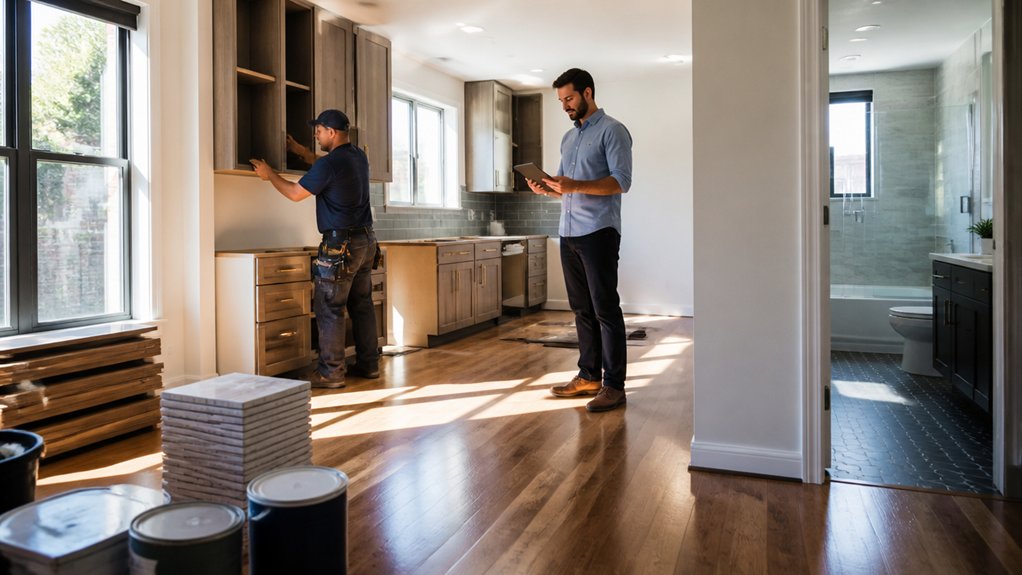
When you target rental yield, you prioritise upgrades that either lift achievable rent or reduce vacancy with minimal capital outlay. Focus on data from market trends and comparable listings to estimate rent deltas and absorption rates.
Prioritise improvements that streamline maintenance, lower operating costs, or improve occupancy stability. Model impacts against property tax obligations and holding costs, so gains translate to net yield.
Avoid capital-heavy works with long payback periods. Track performance post-renovation, compare against baseline metrics, and reinvest where returns compound.
Align decisions with your portfolio’s benchmarks, so each upgrade earns its place and strengthens your position within a disciplined investor community.
Use simple sensitivity analyses to test downside scenarios and confirm resilience across cycles, ensuring cash flow stays positive under conservative assumptions.
Pick Renovations Tenants Will Pay More For
With yield targets set, you now choose upgrades tenants consistently pay a premium for. Focus on features with measurable rent lifts across comparable listings.
Exterior landscaping boosts first impressions and shortens vacancy, while durable finishes reduce ongoing costs.
Prioritise energy efficiency upgrades like insulation, LED lighting, and efficient heating; tenants value lower bills and will pay for it.
Add secure parking, built-in storage, and reliable internet readiness to match modern expectations.
Use local rental data to confirm premiums and avoid overcapitalising. You’re not chasing trends; you’re aligning with what your tenant base recognises as value.
When your property fits that shared standard, you strengthen occupancy, reduce churn, and compound returns over time.
Benchmark results quarterly and adjust scope to keep returns tracking above target.
Best Kitchen and Bathroom Renovations for ROI
Because kitchens and bathrooms anchor tenant perception of quality, you should target upgrades that deliver visible value without blowing the budget. Focus on cabinet refacing, durable countertops, and neutral palettes that photograph well and age slowly. Install Smart appliances that reduce maintenance calls and signal modern living.
In bathrooms, prioritize walk-in showers, quality lighting, and water-saving Eco friendly fixtures tenants recognize immediately. Choose mid-range finishes with strong supplier warranties and standardized sizes to control costs and speed turns.
Upgrade hardware, taps, and backsplashes for quick visual impact without full replacements. Keep layouts unchanged to avoid plumbing shifts and downtime.
You join owners who invest where renters notice first and renew faster. These choices lift perceived quality and support consistent occupancy across properties in market.
Calculate ROI on Investment Property Renovations
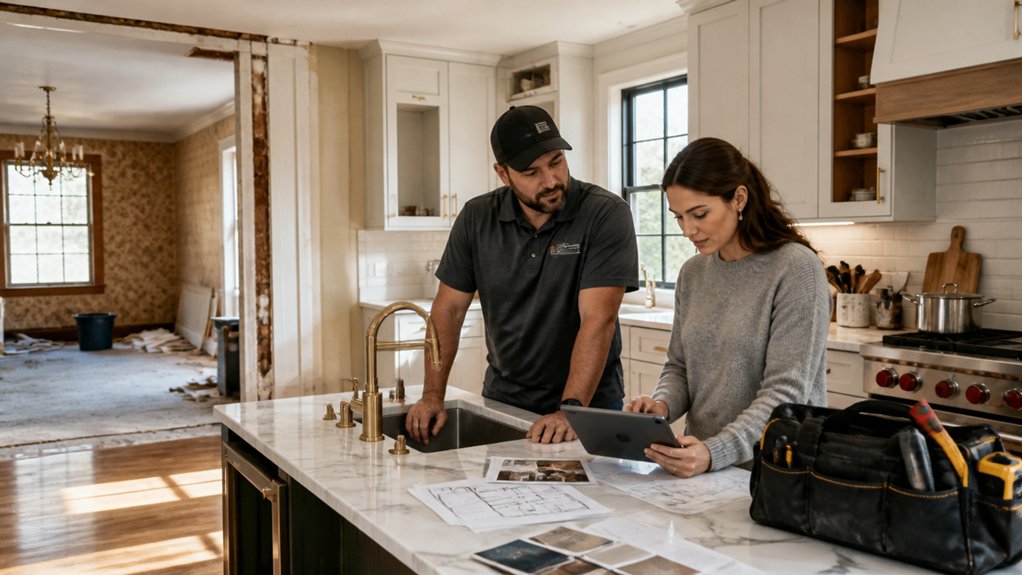
You need to quantify expected gains before committing capital, starting with a clear estimate of post-renovation value and rental uplift.
Compare projected returns against total costs, including materials, labor, holding time, and financing, to calculate your true ROI.
If the numbers don’t show a strong margin above your target threshold, you shouldn’t proceed.
Estimating Renovation Returns
While renovation ideas often start with aesthetics, the real driver of smart investing is measurable return. You estimate returns by linking renovation budgeting decisions to projected rent uplift, vacancy reduction, and resale premiums.
Start with baseline property performance, then model post-renovation income using local comparables and conservative assumptions. Factor in timing, as faster completion improves annualised ROI.
Your contractor selection directly influences cost control and delivery speed, so vet for reliability and transparent pricing. Track expected versus actual metrics to refine future estimates and stay aligned with investor benchmarks.
When you approach renovations this way, you’re not guessing—you’re participating in a disciplined, data-led community that prioritises outcomes, not opinions.
Build simple dashboards to monitor weekly progress, keeping your projections grounded and decisions accountable consistently.
Cost Versus Value Analysis
Although renovation costs are easy to tally, value only counts when it translates into measurable gains in rent, occupancy, or resale price. You should compare total project cost against projected income uplift and exit value, using conservative assumptions and local comps.
Prioritise upgrades that deliver the highest payback within your hold period, and model sensitivity for vacancies and rate shifts. Factor lifecycle savings from eco-friendly upgrades and premiums tied to Historical preservation where demand supports it.
If ROI falls below your hurdle rate, cut scope or defer; if it exceeds, scale confidently across your portfolio with disciplined capital allocation. You align with investors who benchmark returns quarterly and reinvest only where data proves durable gains and tenant demand resilience across changing market cycles.
Avoid Overcapitalising on Property Renovations
Because renovation spend doesn’t always translate into equivalent value uplift, overcapitalising can erode your returns quickly. You need to anchor every dollar to comparable sales, rental comps, and yield targets, not personal taste. If your upgrade budget pushes total cost above local ceilings, you’re funding value the market won’t repay.
That gap compounds when higher property taxes and insurance costs follow an inflated valuation.
Stay disciplined by setting a maximum all-in cost aligned with expected resale or rental income. Track marginal gains per dollar and stop when returns taper. Investors in your position win by preserving equity, not chasing prestige finishes.
Keep improvements consistent with neighbourhood standards so your asset fits the market and performs over time for long term portfolio strength and stability.
Balance Cosmetic and Structural Upgrades
When you allocate renovation capital, you’ll get stronger, more predictable returns by pairing visible cosmetic updates with essential structural fixes rather than over-indexing on either. You align returns with buyer expectations and reduce downside risk.
Start with safety, compliance, and durability—roofing, wiring, plumbing—then layer in finishes that reflect current styling trends and neutral color schemes. Data shows blended scopes lift appraisal values and shorten vacancy.
Avoid chasing premium fixtures if core systems lag; tenants and lenders price that risk immediately. Likewise, don’t hide solid bones behind dated finishes; you’ll cap achievable rent.
Balance spend so every dollar signals quality, function, and market fit. That’s how you compete with disciplined investors and stay in the deal flow that rewards consistency and strengthens your portfolio’s reliability.
Plan Renovations for Better Long-Term Returns
With a balanced scope in place, you now plan renovations against a longer hold horizon so each dollar compounds instead of just lifting near-term appeal. Anchor decisions in data: rent premiums, cap rate impact, maintenance curves, and exit liquidity.
Prioritise systems that lower lifecycle costs and boost durability, then stage cosmetic updates to match market timing. Tight renovation budgeting keeps contingencies realistic and protects yield under stress.
Pair this with disciplined contractor selection, favouring proven timelines, transparent pricing, and warranty coverage. You sequence works to minimise vacancy and capture incremental rent after each phase.
About the Author