
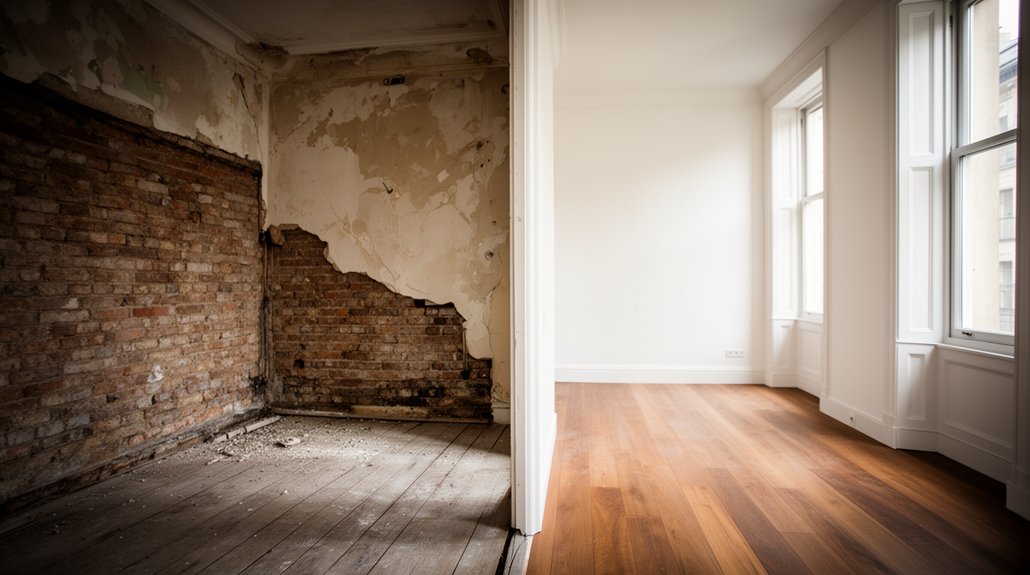
Like an alchemist turning base metal into gold, you can convert a neglected property into a high-yield asset through full-scale refurbishment. You’ll strip back defects, reconfigure layouts, and install efficient systems to drive rent, reduce voids, and lift valuation. With disciplined cost control and sharp deal analysis, hidden value becomes measurable profit—but only if you choose the right asset and execute with precision…
Key Takeaways
- Full-scale refurbs reset outdated properties, improving condition, compliance, and appeal to command higher rents and resale values.
- Upgrading structure, MEP systems, and insulation reduces risk, lowers operating costs, and increases long-term asset performance.
- Reconfiguring layouts unlocks usable space, aligns with market demand, and boosts revenue per square foot.
- Addressing deferred maintenance and documenting upgrades strengthens valuations, survey outcomes, and buyer or lender confidence.
- Strategic planning, cost control, and market-aligned design maximize ROI by turning neglected assets into high-quality, competitive products.
What a Full Scale Refurb Includes
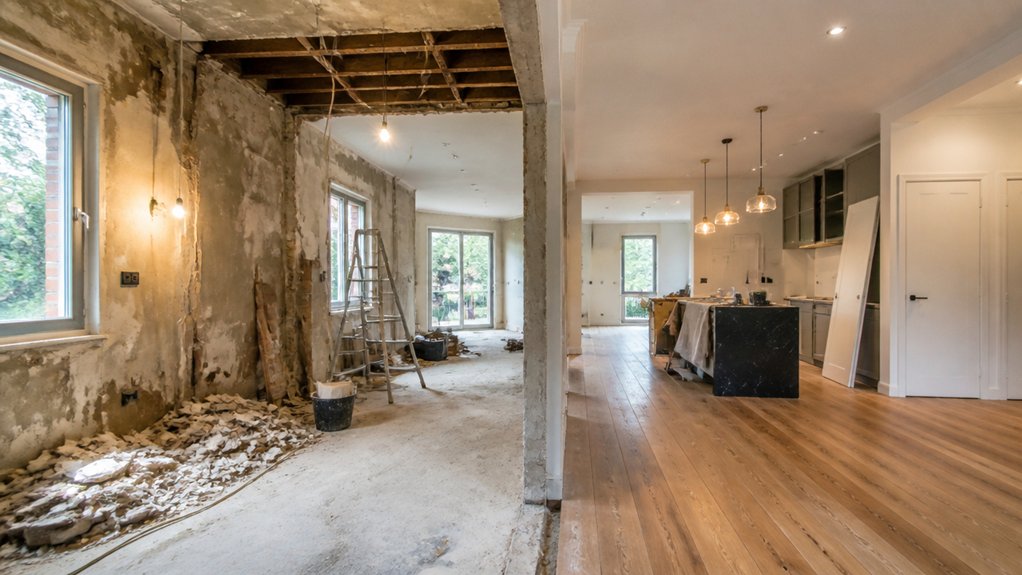
When you commit to a full-scale refurb, you’re not just patching defects—you’re systematically resetting the asset to maximize rental yield, capital appreciation, and long-term durability. You strip the property back to core fabric, upgrade MEP systems, reconfigure layouts, and align specifications with target tenant profiles.
You integrate Historic preservation where character drives premiums, while executing high-impact interior decoration that elevates perceived value and absorption speed. You standardize finishes, optimize EPC performance, resolve structural defects, and guarantee compliance to de-risk operations.
You’re building a cohesive product that signals quality, commands stronger rents, and attracts reliable occupants who stay longer. Every decision ties back to lifecycle value, maintenance efficiency, and market positioning, so your refurb competes with newer stock without sacrificing authentic identity within your portfolio.
How to Calculate Refurb Costs vs Profit
Although the scope may feel complex, you calculate refurb profitability by anchoring every cost and uplift to hard numbers and realistic assumptions.
Start with acquisition price, stamp duty, financing, and contingency, then layer in line-by-line renovation budgeting for labor, materials, and compliance.
You benchmark costs against comps, validate contractor quotes, and stress-test timelines to avoid margin erosion.
Next, project gross development value using conservative comparables and realistic exit liquidity.
Your Financial analysis should model best, base, and worst cases, capturing holding costs, fees, and tax leakage.
Finally, derive net profit and ROI, ensuring your margin clears your risk threshold.
When your numbers align, you move with confidence and discipline.
You stay within your peer group, speaking the same metrics and protecting downside with buffers.
Why Full Scale Refurbs Create Hidden Value
You reveal hidden value when you expose a property’s structural potential—addressing deferred maintenance, upgrading core systems, and resetting the asset’s baseline.
You then capture layout optimization gains by reconfiguring flow, increasing usable square footage, and aligning the unit mix with demand to boost rent comps.
Finally, you transform market appeal through cohesive finishes and modern specs, tightening days-on-market and expanding your buyer or tenant pool.
Structural Potential Revealed
While most investors fixate on cosmetic upgrades, the real upside often sits behind the walls, where a full-scale refurbishment exposes structural capacity that was previously unusable or undervalued. You assess load-bearing walls, foundation integrity, and roof spans, revealing square footage, vertical expansion, and higher allowable loads.
By upgrading framing, reinforcing joists, and modernizing MEP systems, you de-risk the asset and expand exit strategies. Lenders and appraisers reward this hidden resilience with comps and cap rates. You’re not just patching defects; you’re converting latent capacity into bankable value.
Even within Historical preservation constraints, you can integrate structural steel, underpinning, and seismic upgrades without compromising aesthetic enhancements. That balance signals sophistication to buyers and partners, placing you within a community that understands how structure drives yield.
Layout Optimization Gains
Once the structure proves out, the real lift comes from reprogramming the floor plan to match demand and monetize every square foot. You strip dead corridors, right-size rooms, and open sightlines to drive functional density and higher ARV.
You align interior design with use-cases—work-from-home zones, ensuite additions, storage walls—so space earns its keep. You relocate kitchens and services to reduce friction, shorten runs, and cut capex per upgrade.
You convert underutilized areas into rentable or premium zones, boosting yield. Even landscaping improvements tie in, extending living areas and improving flow between inside and out.
Done well, you don’t just renovate—you recalibrate the asset’s performance, tighten leasing velocity, and maximize revenue per square foot. That precision compounds returns across hold periods and exit valuations consistently.
Market Appeal Transformation
After the heavy lifts on structure and layout, full-scale refurbishments reveal a different layer of value by repositioning the asset in the buyer and tenant psyche. You don’t just upgrade finishes; you recalibrate perception, compressing time-on-market and widening your demand pool.
By aligning design language with local comps and amplifying historical significance, you create narrative-driven appeal that commands premium rents and tighter yields. Strategic branding, curated amenities, and cohesive common areas signal quality, de-risking decisions for buyers and tenants.
As neighborhood revitalization gains momentum, your asset becomes a benchmark, not a laggard. You attract higher-credit occupants, improve retention, and justify escalations.
Every touchpoint, from curb appeal to leasing collateral, converts interest into absorption, turning overlooked stock into a competitive, community-anchored investment with durable upside.
How to Spot the Right Refurb Property
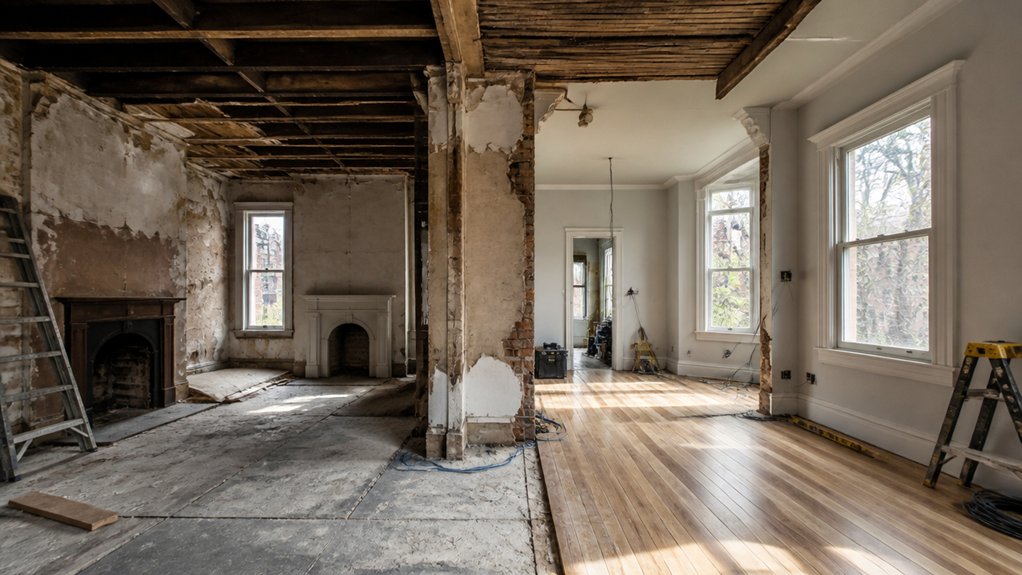
You start by screening for structural red flags—subsidence, roof failure, outdated MEPs—because they’ll dictate capex and margin erosion.
Then you pressure-test location fundamentals, checking micro-demand drivers like transport links, schools, and tenant/buyer liquidity.
If the numbers stack after factoring risk, you’ve likely found a refurb where forced appreciation can outperform your hurdle rate.
Structural Red Flags
While cosmetic issues can inflate perceived upside, structural defects will quietly erase your margins if you don’t catch them early. You’re hunting for scalable ROI, so train your eye on foundation issues, roof deterioration, and load-bearing anomalies. Hairline cracks can signal settlement; stepped brickwork often flags movement.
Inside, look for sloping floors, sticking doors, and ceiling deflection—these translate into capex creep.
Get granular with surveys and contractor walk-throughs; quantify remediation, not guess it. If underpinning, truss replacement, or widespread damp proofing appear, stress-test your numbers and build contingencies.
The right deal still exists here, but only if you price risk precisely and move with discipline alongside investors who value rigor. Document assumptions, benchmark costs per square foot, and protect margin through disciplined underwriting always.
Location And Demand
Where does the deal actually make money—on paper or in the postcode? You chase locations where demand outpaces supply, not just cosmetic upside. Track rental comps, absorption rates, and days-on-market; they signal liquidity and exit certainty.
Look for neighborhood revitalization already in motion—new transit links, retail anchors, and public *sector* upgrades that pull in higher-income tenants. You align your scope with zoning regulations, ensuring extensions, conversions, or density plays are permitted, not speculative.
You prioritize micro-markets with tight vacancy and diverse demand drivers—students, professionals, and families—so your refurb hits multiple buyer pools. You don’t gamble on hype; you underwrite to proven demand, stress-test rents, and confirm resale comparables before committing capital.
Layer in conservative cap rates and buffer for costs to protect downside risk.
Step-by-Step Full Scale Refurb Planning
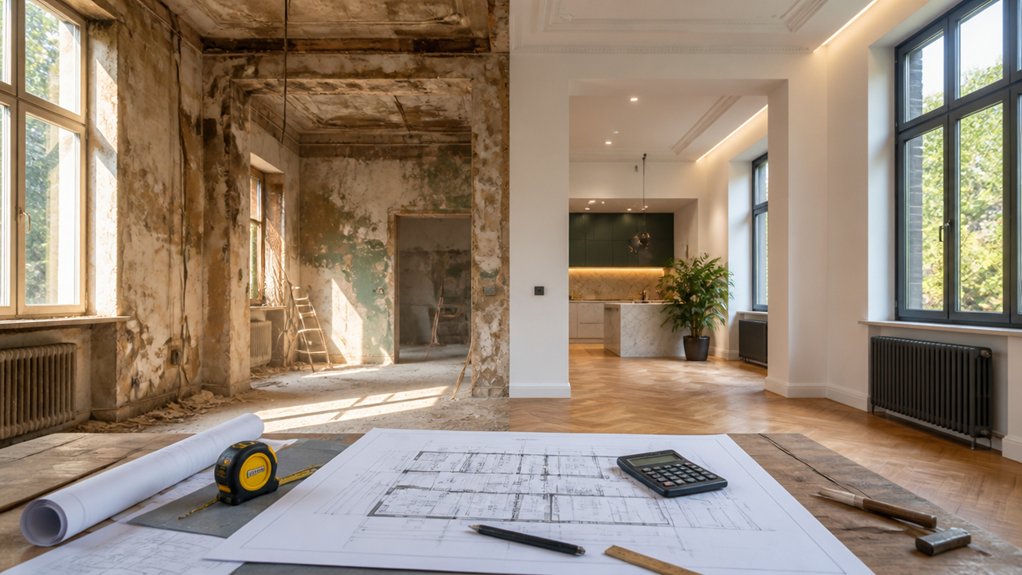
Once the scope of neglect is fully assessed, build a refurbishment plan that prioritizes high-impact, value-driving upgrades in a clear sequence: stabilize structure and safety first (roof, foundation, electrics, plumbing). Then tackle layout and functional improvements, and finally execute cosmetic finishes that maximize resale or rental appeal.
You’ll align budgets with projected ARV, phase works to protect cash flow, and benchmark costs against comps. Integrate Historical preservation where it enhances premiums, and use Interior design to position the asset for your target tenant or buyer.
Sequence trades tightly, lock procurement early, and set contingencies. Track KPIs—cost per square foot, schedule variance, margin—and iterate fast. By following a disciplined, investor-grade roadmap, you reduce risk, compress timelines, and capture upside others miss in competitive markets today.
Structural Repairs That Increase Property Value
Because buyers and lenders price in risk immediately, structural repairs deliver some of the highest ROI by converting uncertainty into bankable value. You prioritise foundation stabilization, damp remediation, roof integrity, and load-bearing elements to de-risk surveys and reveal competitive financing.
Precise scopes and engineer-led reports reduce retention, compress timelines, and justify stronger valuations. Targeted works like underpinning, lintel replacement, and structural timber treatment create durability buyers trust.
Tie upgrades to Historical preservation where applicable, protecting heritage value while meeting modern compliance. Then layer aesthetic enhancements only after the shell is sound, ensuring finishes aren’t masking defects.
Package warranties, completion certificates, and before-and-after evidence to signal quality to valuers and lenders, positioning your asset within the top comp bracket. Boost liquidity and exit multiples at resale.
Layout Changes That Increase Buyer Demand
With the structure secured, you can reconfigure space to match how buyers actually live and pay. Open-plan kitchens, clear sightlines, and flexible rooms increase perceived square footage and liquidity. You’ll remove dead corridors, reposition walls, and prioritize flow between cooking, dining, and lounging zones.
Add an en-suite where comps demand it, and carve storage into underused voids to lift appraisal confidence. Interior lighting should layer task, ambient, and accent schemes to guide movement and highlight focal areas.
Align internal flow with exterior appeal through Landscaping improvements that extend living zones and strengthen first impressions. When your layout mirrors local buyer personas, you reduce days on market, tighten negotiation gaps, and convert interest into higher offers while reinforcing a sense of belonging buyers recognize instantly.
Energy Upgrades That Boost Refurb ROI
While energy upgrades rarely headline a listing, they directly influence buyer calculus by lowering lifetime ownership costs and tightening your asset’s competitive spread. You capture margin through measurable Energy efficiency gains: high-performance glazing, smart HVAC, and targeted insulation upgrades that cut heat loss and stabilize loads.
Model payback using utility benchmarks and EPC deltas, then price the uplift into comps. Buyers in your cohort recognize lower OPEX, tighter comfort bands, and future-proofed compliance, so they’ll accept sharper pricing.
Bundle certifications, warranties, and data logs to de-risk decisions and accelerate close. Sequence works early to avoid rework, lock contractor rates, and protect schedule.
Done right, these upgrades expand buyer pool, compress days on market, and convert capex into defensible valuation premiums at exit today consistently.
Should You Sell or Rent After Refurb?
Although your refurb may be complete, the real value decision sits in exit timing: sell now to crystallize gains or rent to compound them. You’ll benchmark local yields against sale comparables, stress-test cashflow, and model IRR under different hold periods.
If your asset carries Historical significance, buyer demand may command a premium, but leasing can monetize that narrative over time. Factor in zoning restrictions, which can cap use, density, or short-let strategies, directly shaping revenue ceilings.
Align with your capital stack, tax position, and risk tolerance; seasoned operators in your circle optimize for liquidity or durable income streams. Then execute decisively.
Track vacancy, refinance options, and exit cap rates so you stay inside your target returns and avoid value leakage during stabilization phase ahead.
About the Author