If you want to cut your energy bills quickly, start with the changes that pay back fastest. You can seal draughts, switch to LED bulbs, turn your thermostat down by one degree and make better use of timers and controls. These are simple jobs, but they can trim waste straight away. The key is knowing which fixes matter most, and which upgrades are worth your money next.
Key Takeaways
- Switch to LED bulbs and unplug standby devices to cut electricity use immediately.
- Lower heating by one degree and use smart timers or thermostats for better control.
- Seal drafts around windows, loft hatches, skirting boards, and letterboxes to keep heat in.
- Add loft insulation and hot water tank lagging to reduce heat loss and energy bills.
- Wash at 30°C, use efficient appliance settings, and run only full loads to save power.
Quick Wins to Cut Energy Bills
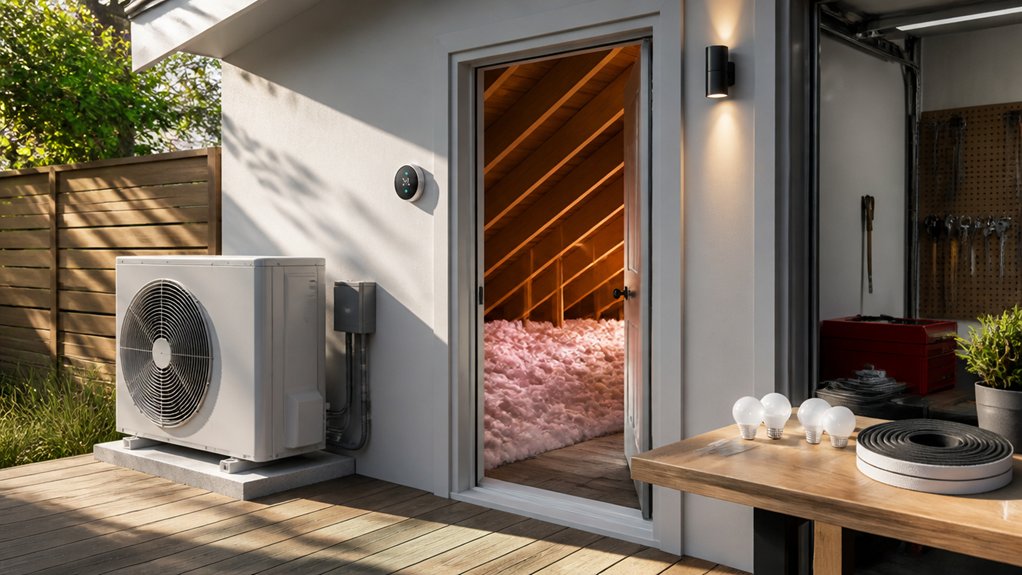
When you want to cut energy bills quickly, start with the low-cost fixes that deliver immediate savings. You can fit LED bulbs, set smart timers, and lower heating controls by one degree without losing comfort.
If you’re in the UK, check whether you qualify for local grants or advice through energy audits, which show where your home wastes money.
Keep appliances on efficient settings, wash at 30°C, and switch off standby loads.
If you’re joining neighbours who want lower bills and cleaner homes, consider renewable energy options such as a small solar array or a green tariff.
These quick wins won’t transform everything overnight, but they’ll help you feel in control, cut waste fast, and build momentum for bigger improvements later.
Seal Air Leaks to Stop Drafts
Drafts often waste more heat than people realise, so sealing air leaks is one of the fastest ways to improve comfort and cut bills. You can feel them around window frames, loft hatches, skirting boards and letterboxes, and each gap lets warm air escape.
Use your hand, a lit candle, or an incense stick to find movement, then seal small cracks with decorators’ caulk, weatherstripping or draught excluders. For larger openings, fit brush strips, chimney balloons or foam fillers suited to UK homes.
This kind of draft prevention reduces air infiltration and helps your rooms feel steadier through cold snaps. You’re not just patching a house; you’re making your home work better for everyone inside.
Start with the draughtiest spots, and you’ll notice the difference quickly.
Lower Heating and Cooling Costs
You can cut heating and cooling bills by sealing any remaining air leaks, so your home holds warmth in winter and stays cooler in summer.
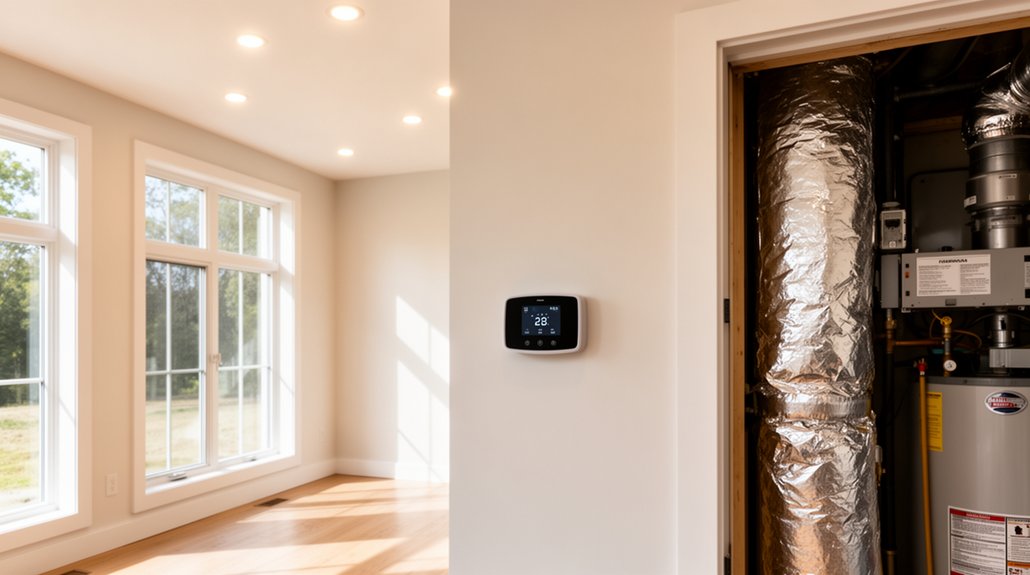
You should also upgrade your thermostat controls, as a programmable or smart model helps you avoid wasting energy when you’re out or asleep.
These changes are straightforward, practical ways to lower costs in UK homes without sacrificing comfort.
Seal Air Leaks
Where’s your home quietly wasting heat? You can stop much of it by sealing gaps around skirting boards, loft hatches, pipework, and window frames.
In a British home, a sound air barrier matters: it keeps warm air in and cold air out, so your heating works less hard. Use caulk, expanding foam, or weatherstripping where materials meet, and check doors for daylight at the edges.
Good draft prevention also means closing cracks behind cupboards and around service entries. You’ll feel the difference in comfort straight away, and your home will seem more settled and welcoming.
Tackle one room at a time, starting with the chilliest spots. Small fixes add up fast, helping you keep energy bills down without losing that cosy, lived-in feel.
Upgrade Thermostat Controls
A smarter thermostat can trim your heating and cooling costs without making your home less comfortable. If you’re in a typical UK home, smart thermostats let you heat rooms when you need them, not all day. Set programmable controls around your routine, then let the system lower temperatures while you’re out or asleep. You’ll waste less gas or electricity, and you’ll keep better control in changeable British weather.
Many models link to your phone, so you can adjust settings before you get home, or switch off accidental heating from anywhere. Look for clear scheduling, zone control, and compatibility with your boiler or heat pump.
When you upgrade, you join millions making homes more efficient, comfortable, and cost-conscious.
Switch to LED Lighting
Switching to LED lighting can cut your energy use straight away, helping you lower household bills without sacrificing day-to-day comfort.
You’ll also benefit from bulbs that last much longer than old incandescent or halogen options, so you replace them less often.
In the UK, LEDs give you bright, reliable light for less money over time.
Lower Energy Use
Cutting your lighting bill is one of the quickest ways to lower energy use at home or in the workplace. When you switch to LED lighting, you use far less electricity than with old halogen or incandescent lamps, and that helps your team or household feel part of a smarter, lower-carbon way of living.
In the UK, it’s a practical upgrade that supports renewable energy goals by easing demand on the grid. You can pair LEDs with energy monitoring to see the savings clearly and spot waste fast.
Choose the right brightness and colour temperature for each room, then replace fittings in the spaces you use most. That way, you cut costs now and keep control without any fuss.
Longer Bulb Lifespan
LED bulbs also last far longer than halogen or incandescent lamps, so you won’t just cut your electricity use — you’ll replace bulbs far less often too. That means less hassle for you and steadier savings across your home.
In a busy UK household, bulb longevity matters because fewer failures mean fewer ladder trips, fewer spare bulbs to buy, and less time spent on lighting maintenance. You can fit LEDs in most rooms and expect reliable performance for years, even with daily use.
For families, landlords, and flat-sharers alike, that adds up to a smarter routine and a more settled feel. When you choose LEDs, you join others who value practical upgrades that work hard, last long, and keep costs under control.
Brightness For Less
If you want bright rooms without a bigger electricity bill, LED lighting gives you exactly that. You’ll cut energy use sharply, and you won’t lose the warm, welcoming feel your home needs.
Choose dimmable LEDs in living areas, kitchens, and hallways, then match the colour temperature to the room so it feels right for everyone.
In the UK, where daylight shifts fast, LEDs help you stay comfortable after dusk and through grey afternoons. Pair them with Natural daylight by opening Window treatments during the day, then switch to efficient lighting when the light fades.
You’ll save money, reduce maintenance, and make your home feel more modern and connected to the way people actually live.
Use Your Smart Thermostat Better

Set your smart thermostat to match when you’re actually home, rather than leaving it to run on a fixed schedule that no longer suits your routine. Use smart scheduling to warm the house before you get up, then ease back when you’re out, and save the biggest boosts for evenings together.
Tailor personalised settings for weekdays, weekends, and school runs, so the system works with your life, not against it. In a typical UK home, even small temperature adjustments can trim bills without sacrificing comfort.
Check the app weekly, especially after shifts, holidays, or a change in weather, and keep things consistent for everyone in the household. That way, you’ll stay cosy, cut waste, and feel in control.
Cut Standby Power Waste
Even when appliances look switched off, many still draw a small amount of power, so unplug chargers, TVs, games consoles and kitchen gadgets when you’re not using them.
In the UK, that standby power can quietly nibble at your bill all year, especially in busy homes with lots of devices.
Group your kit on easy-to-reach extension leads with switches, so you can cut several energy vampires in one go before bed or when you leave for work.
Charge phones and laptops only when needed, then disconnect the plugs.
Check your set-top box, printer and microwave displays too, because they often keep drawing power.
Make this a shared household habit and you’ll trim waste without losing convenience. It’s a small change, but it adds up fast.
Reduce Water Heating Costs
You can cut water heating costs by lowering your hot water thermostat to a sensible setting, which still meets everyday needs without wasting energy.
Fit insulation jacket on the hot water cylinder and lag exposed pipes to keep heat where you need it.
These simple upgrades can trim bills and improve efficiency across your home.
Lower Water Temperature
How much heat does your hot water really need? If your cylinder or combi is set higher than necessary, a small temperature reduction can deliver quick hot water savings.
In most UK homes, you can usually set the thermostat to 60°C for stored hot water and still stay within sensible hygiene guidance. That’s hot enough for everyday use, yet lower than many systems run by default.
Check your boiler or immersion settings and make one change at a time, then watch your bills. You’ll cut wasted energy without changing your routine.
If you share a home, agree the setting together so everyone stays comfortable. This simple tweak helps you join the growing number of households trimming costs with confidence, control, and less waste.
Insulate Tank And Pipes
Could your hot water be leaking heat before you use it? If you’ve got a hot water cylinder, fit tank insulation jacket or top up existing lagging; in the UK, that small job can trim standby losses fast.
You should also add pipe wrapping to the first metre or two of hot and cold pipes near the tank, especially in lofts, garages, and airing cupboards. Keep the insulation snug, secure, and clear of valves and controls so you don’t cause safety issues.
You’ll feel the benefit in quicker heat retention and lower gas or electricity use. If you’re part of a busy household, this is a simple win everyone can back.
Check for gaps, damp, or damaged insulation each year, and replace worn sections promptly.
Improve Insulation for Fast Savings
Even small insulation upgrades can cut heat loss quickly, making your home cheaper to run and more comfortable through the colder months. You’ll feel the difference fastest by topping up loft insulation, sealing draughty gaps, and checking cavity walls if your home has them. These simple thermal barriers help keep warmth where it belongs, so your boiler works less and your rooms stay steadier.
Use proven insulation techniques around loft hatches, pipes, and floorboards, especially in older UK homes where heat slips out fast. If you’re part of a community of homeowners watching every bill, this is a smart first move.
You don’t need a full renovation to get results; targeted improvements can deliver noticeable savings and a cosier home surprisingly quickly.
Upgrade to Energy-Efficient Appliances
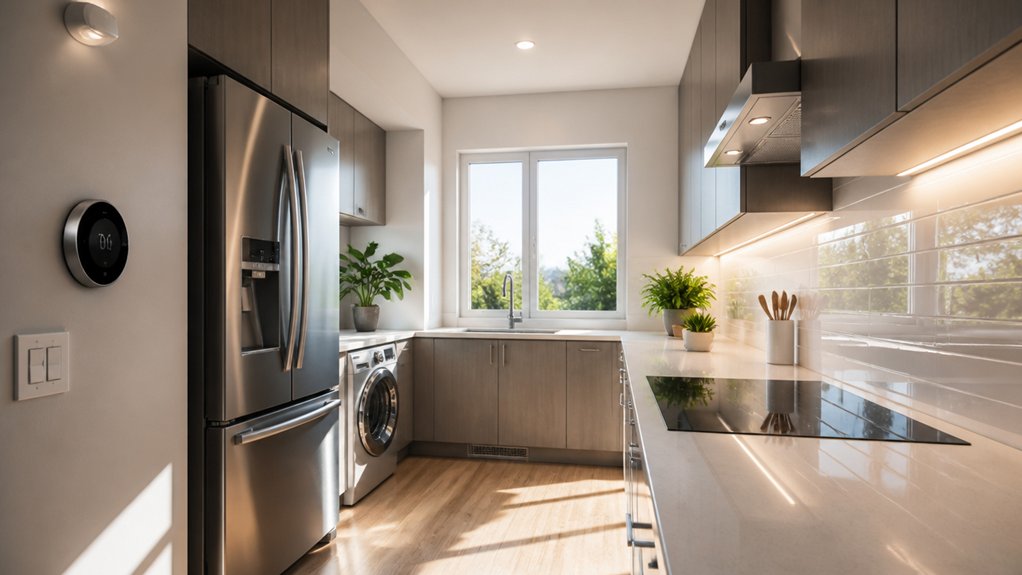
Upgrading to energy-efficient appliances can cut your household running costs without sacrificing performance. When you replace an old fridge, washing machine, or dishwasher, look for the highest energy labels and check energy star certifications, so you’re comparing like with like.
In the UK, the best models use less electricity and water, which helps your bills and the grid too. You’ll also get quieter operation and better reliability, so your home feels more modern and comfortable.
Keep appliance maintenance simple: clean filters, defrost freezers, and check seals to protect efficiency. If you’re buying for the long term, choose the right capacity for your household; oversized kit wastes energy.
Join the many households making smarter choices, and you’ll see savings quickly.
Build Daily Energy-Saving Habits
Small daily changes can make a noticeable dent in your energy use, and they often cost nothing to start. You can switch off standby at the socket, wash at 30°C, and batch cooking to avoid reheating the oven. In a typical UK home, those habits add up fast.
Set timers, use daylight where you can, and keep radiators clear so heat moves freely. If you’re part of a household, get everyone involved; shared routines work better than nagging.
Pair these habits with energy audits to spot waste, then compare your progress each month. Where possible, choose renewable sources for your tariff or heating, so your effort supports cleaner power too.
You’ll feel the savings, and you’ll help build a more efficient home together.
About the Author