
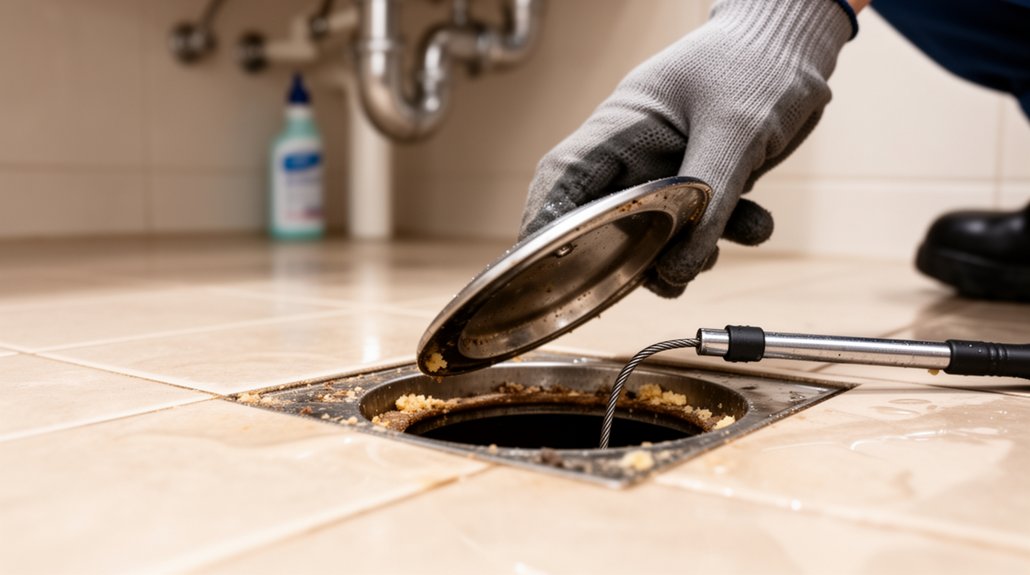
When a shower starts to smell like a forgotten sewer, you know something’s off. You can usually trace it to a dry P-trap, a clog of hair and soap scum, or a vent issue that’s letting gases slip through. Start with the simplest fixes, then check for damage you can’t see, because the real source may be hiding just beyond the drain.
Key Takeaways
- Check whether the smell comes from the shower drain, sink, or toilet to narrow down the source.
- Refill a dry P-trap with water, since an empty trap lets sewer gas enter the bathroom.
- Clean the drain cover and opening, removing hair, soap scum, and grime with a brush and hot water.
- Inspect vent pipes and drain seals for blockages, cracks, or loose fittings that may allow odors to escape.
- Call a licensed plumber if the smell persists, because hidden leaks or damaged drain lines may need repair.
Find the Source of the Sewage Smell
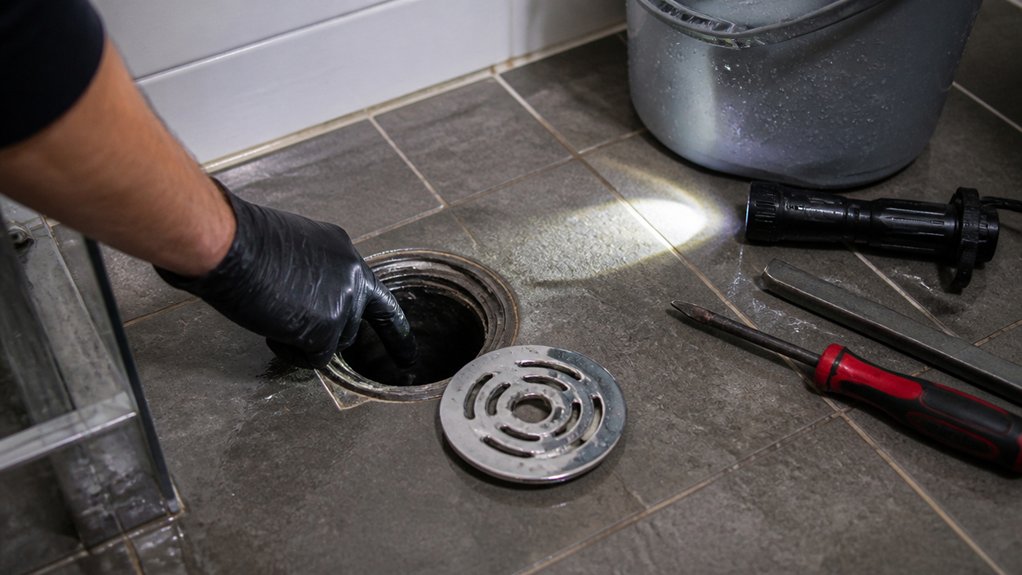
Before you fix a shower drain sewer smell, you need to locate where it’s coming from. Start by sniffing around the shower, nearby sink, and toilet so you can tell whether the odor comes from one fixture or spreads through the room.
Run the shower, then watch for changes in smell, gurgling, or slow draining, because those clues point to the problem area. If the scent gets stronger after water use, note the timing and intensity.
Check for loose drain covers, visible grime, or backed-up water around the opening. This quick scan supports odor prevention and smart drainage maintenance, helping you act with confidence.
When you identify the source early, you protect your home and stay in control with the rest of your household.
Check the Shower Drain P-Trap
If the smell seems strongest at the shower, the P-trap is one of the first places to inspect. You need enough water in that curved pipe to block sewer gases from coming back up.
If the trap has dried out, pour in a few cups of water and see whether the odor fades. Check for loose fittings, cracked pipes, or poor drain sealing around the shower drain, since any gap can let smells escape.
If the shower hasn’t been used in a while, a dry trap is common, and regular P trap maintenance helps prevent it. After you refill it, wait a few minutes and confirm the smell stays gone.
If it returns quickly, the trap may have a deeper problem that needs repair from a plumber.
Clear Hair and Soap Scum
Even with a full P-trap, built-up hair and soap scum can trap odors and slow drainage, so remove the drain cover and pull out any visible debris.
Use a plastic drain tool or bent wire to reach deeper, then lift out clumps without forcing them farther down.
You’re not alone if hair buildup keeps coming back; showers collect it fast.
Wipe the drain opening with a cloth to remove soap residue along the rim and in the threads of the cover.
If the cover is stained, scrub it before reinstalling it snugly.
When you clear this mess regularly, you help your shower stay fresh, drain faster, and avoid that lingering sewer smell.
Make it part of your routine, and you’ll keep the space comfortable for everyone.
Flush Bacteria From the Drain
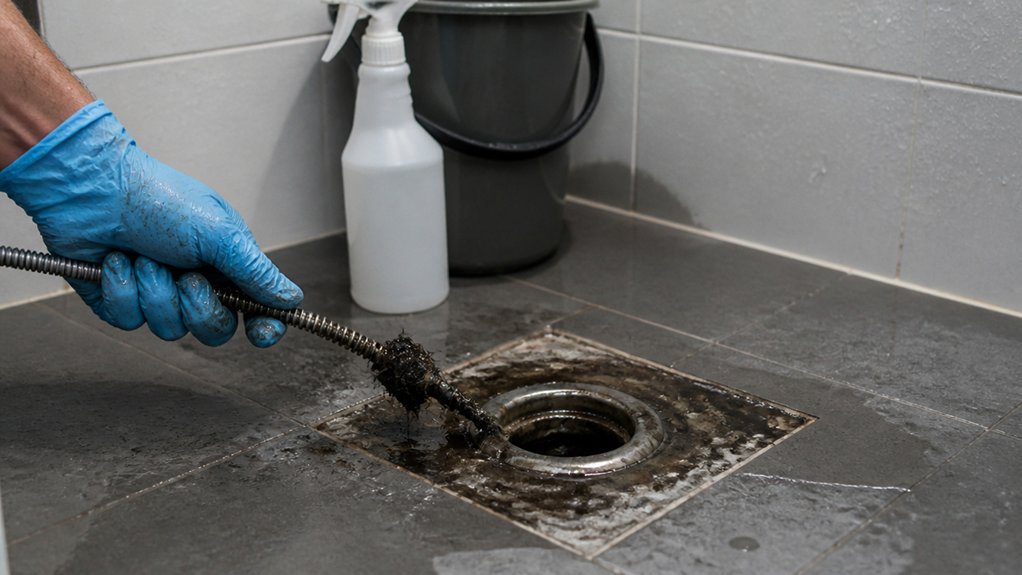
Once you’ve cleared hair and soap scum, flush the drain to remove bacteria and the biofilm they cling to.
Run hot water through the drain to help break up residue.
Then apply an enzyme cleaner to keep buildup from returning.
This step tackles the source of the sewer smell, not just the odor itself.
Remove Biofilm Build-Up
Biofilm often coats the inside of a shower drain, trapping bacteria and feeding that sewer smell, so you need to flush it out, not just mask it. Focus on biofilm removal with a simple bacterial cleaning routine.
Remove the drain cover, then scrub the visible walls and the opening with a stiff brush or an old toothbrush. Work around the lip, where slimy residue clings and odor lingers.
If you belong to a household that shares one shower, make this a regular habit so everyone gets cleaner air and less stink.
Don’t just swish the surface; apply steady pressure and reach into crevices. When you break up that film, you remove the bacteria’s hiding place and help your drain stay fresher longer.
Use Hot Water Flush
After you scrub away the grime, flush the drain with hot water to wash loosened bacteria and residue down the pipe. Keep the stream steady for a minute or two so it reaches the trap and clears lingering film.
Don’t use boiling water if your shower has plastic parts; very hot tap water is enough for safe drain maintenance. This quick rinse helps reduce the sewer smell by removing what’s left behind after cleaning.
If the odor fades, you’re on the right track and your drain is responding well. Make this a regular habit after deep cleaning, especially in humid bathrooms where buildup returns fast.
Hot water won’t replace thorough cleaning, but it gives you a simple, effective reset that keeps your shower fresher and your household more comfortable.
Apply Enzyme Cleaner
If hot water and scrubbing didn’t fully clear the odor, apply an enzyme cleaner to break down the organic residue feeding bacteria in the drain. Choose a product made for shower drains, then pour in the amount listed on the label.
Let it sit overnight so enzyme reactions can work on soap scum, skin cells, and other buildup. Don’t rinse it away too soon; the cleaner needs time for organic breakdown to continue.
Use it regularly if your shower gets heavy use, because steady treatment helps keep the drain fresh and reduces the chance that sewer smell returns.
You’re not just masking the problem—you’re helping your drain stay cleaner, longer, with less effort from you and your household.
Check the Shower Vent Pipe
Check the shower vent pipe for any blockages that could trap sewer gas and force odors back into the drain. You’ll want to make sure air can move freely through the vent so the trap stays sealed properly.
If the vent’s clogged or restricted, clear it right away to restore normal airflow.
Inspect Vent Blockages
A blocked vent pipe can trap sewer gases and force them back through your shower drain, so start by inspecting the vent for leaves, debris, bird nests, or other obstructions.
If you spot a vent blockage, clear it carefully with gloves, a small brush, or a plumber’s snake. Work from the roof only if you can do so safely; otherwise, call a pro.
Look for any airflow obstruction around the vent opening, including ice or damaged screens.
You’re not just fixing a smell—you’re restoring the system your home relies on. When the vent opens up again, the drain can release pressure the way it should, and your shower should stop pulling in sewer odors.
If the vent still looks clear, move on to the next check with confidence.
Confirm Proper Airflow
Even with a clear vent opening, you still need to confirm the shower vent pipe is actually moving air the way it should. Stand near the drain and run water, then listen for gurgling or see whether the trap empties too fast. Those signs point to poor airflow.
If you can access the vent line, check for loose joints, sagging sections, or hidden dips that trap moisture and slow airflow regulation. A properly pitched pipe helps gases escape and keeps sewer smell out of your bathroom.
For stronger ventilation improvement, make sure the vent reaches the main stack without restrictions. If the setup looks off or the odor keeps returning, call a plumber. You want a system that works cleanly, quietly, and with your home.
Inspect the Drain for Damage
Look closely at the shower drain for cracks, loose fittings, or corrosion that could let sewer gas escape into the bathroom. Check the drain material for brittleness, warping, or rust, especially around older metal parts.
Feel around the flange and seal for movement, and inspect pipe connections for gaps, staining, or mineral buildup that signals leakage. If the drain grate shifts or the trim ring won’t sit flush, the assembly may be compromised.
You’ll want a tight, intact drain so your bathroom stays fresh and you stay confident in the fix. Use a flashlight to trace every visible seam and edge.
Small damage can create a persistent odor, so don’t ignore it. If you spot deterioration, plan a repair before moving on.
Try the Fastest Fixes for Shower Odors
Before you dig into bigger plumbing fixes, try the quickest odor blockers: run the shower long enough to refill the trap, flush the drain with hot water, and clean away any soap scum or hair that could be trapping smells.
Then check Bathroom ventilation, because stale moisture can make sewer odors linger in the room. Open a window, run the fan, and keep the space dry after each shower.
Next, inspect the Shower sealant around the base and drain area for gaps that can let odors escape. Wipe the surface clean, then reseal if needed.
These steps won’t solve every problem, but they often stop the smell fast and help your bathroom feel fresh again. You’ve got this, and your shower can smell normal tonight.
Call a Plumber for Hidden Problems
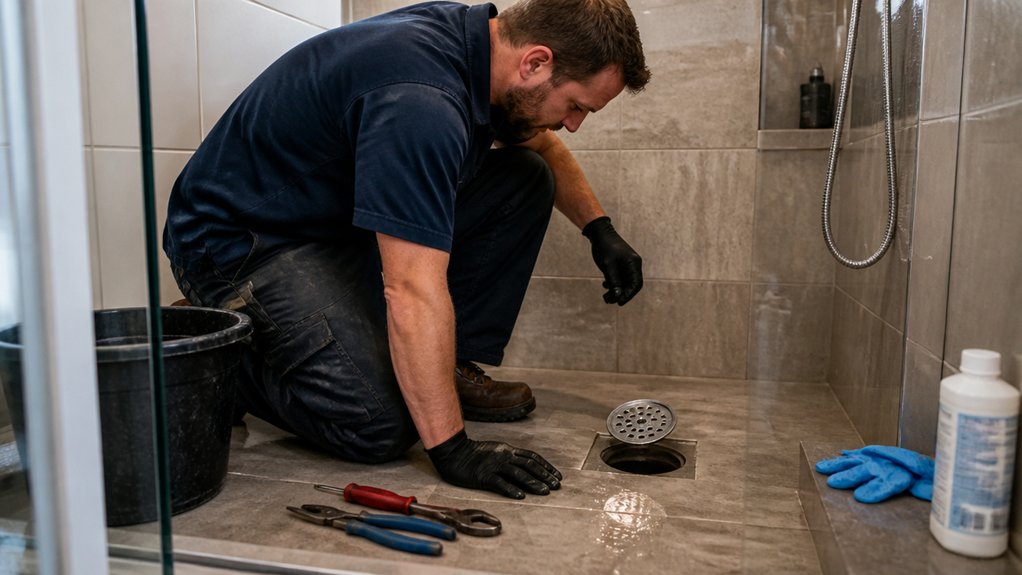
If the sewer smell keeps coming back after you’ve tried the basic fixes, call a plumber to check for hidden problems. You may have hidden plumbing issues like a cracked drain line, loose trap seal, or vent blockage that you can’t see from the shower.
A licensed pro can run a sewer inspection to find leaks, backup points, or damaged joints before the odor spreads. That gives you clear answers and helps you protect your home, your routine, and your peace of mind.
Don’t keep guessing or masking the smell with cleaners. You deserve a bathroom that feels fresh and safe. When you bring in an expert, you’re joining the homeowners who fix the root cause, not just the symptom.
About the Author


