
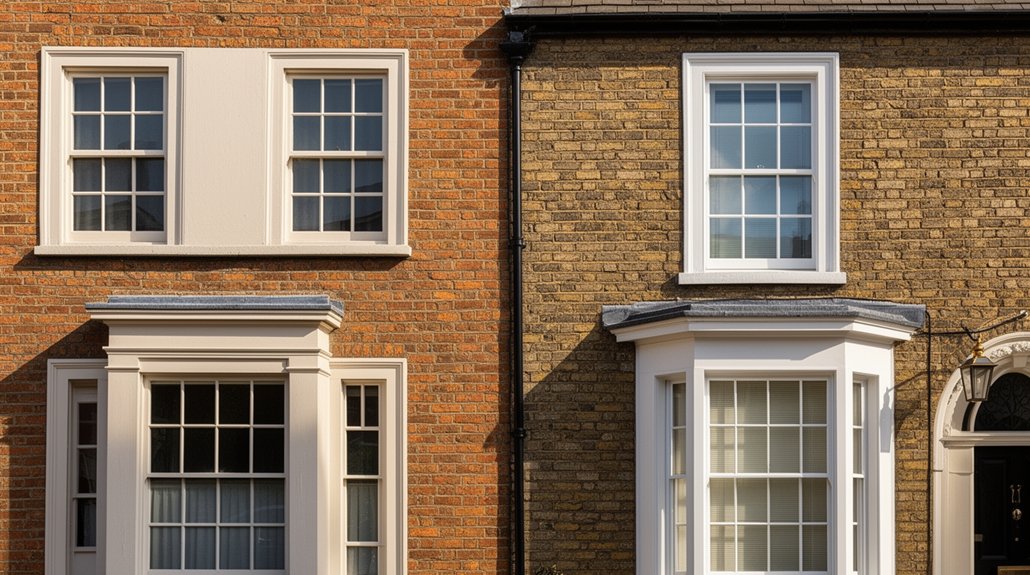
If you’re comparing Georgian and Edwardian sash windows, you’re really looking at how changing glass technology and manufacturing reshaped a familiar form. You can spot the shift in the move from six-over-six panes, with fine glazing bars and strict symmetry, to one-over-one sashes that admit more light and look cleaner. The details seem simple, but the reasons behind them run deeper than style alone.
Key Takeaways
- Georgian sash windows usually used a six-over-six layout with small panes, narrow glazing bars, and strong symmetrical proportions.
- Edwardian sash windows shifted to a one-over-one design, using larger panes and fewer bars for a cleaner, brighter appearance.
- Early glassmaking limits forced Georgian windows to smaller panes, while improved glass production enabled Edwardian larger sheets.
- Georgian sash design emphasized restraint, craft, and order, while Edwardian styles balanced heritage character with greater light and openness.
- Restoration should match original profiles, timber, hardware, and glazing patterns to preserve each style’s historical integrity.
What Is a Sash Window?
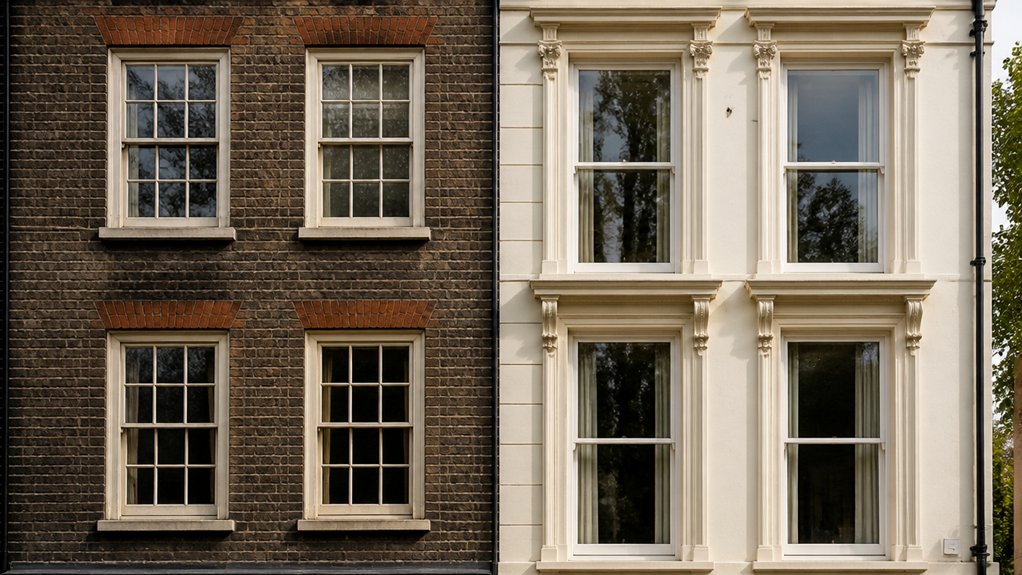
A sash window is a vertically sliding window made of one or more framed glass panels, called sashes, that move within a fixed outer frame. You operate the upper, lower, or both sashes to control airflow, light, and access with precision.
The balance system lets the sash stay where you set it, so you can ventilate without sacrificing comfort. In period homes, you’ll often choose this design for its proportions, serviceability, and discreet character.
Color psychology can help you match frame finishes to the mood you want, from calm restraint to crisp contrast. Strong locks and meeting rails improve window security, giving you confidence in daily use.
If you value heritage detail and practical performance, a sash window fits your space and your standards.
Why Georgian Homes Used Six-over-Six Sashes
Georgian homes used six-over-six sash windows because the design matched the construction and material limits of the period while delivering balanced proportions. You get a format that fits smaller panes, which early glassmaking could produce more reliably, so builders could keep costs and breakage in check.
The layout also supports straight sightlines and a disciplined facade, helping your home read as refined and orderly. Because each sash uses multiple lights, you can replace only the damaged pane instead of the full assembly, which simplifies sash maintenance.
Decorative hardware then reinforces the clean, precise character expected in Georgian architecture. When you live in a period home, you’re part of a tradition that values durability, repairability, and proportion over excess.
Six-over-Six Georgian Sash Design
Six-over-six Georgian sash design divides each window into two vertically sliding sashes, with six small panes in the upper sash and six in the lower, creating a tightly ordered grid that emphasizes symmetry and proportion.
You can read this pattern as a clear architectural code: narrow glazing bars, balanced rails, and disciplined alignment give your facade a calm, refined presence.
When you preserve or replicate it, you join a tradition that values restraint over display. Unlike later Victorian ornamentation, this form keeps decoration subordinate to structure.
In modern adaptations, you can retain the same visual rhythm while improving performance with better hardware, sealed units, and durable timber profiles.
Choose accurate muntin spacing, and your sash will still feel authentic, coherent, and confidently Georgian.
How Glass Limits Shaped Early Sashes
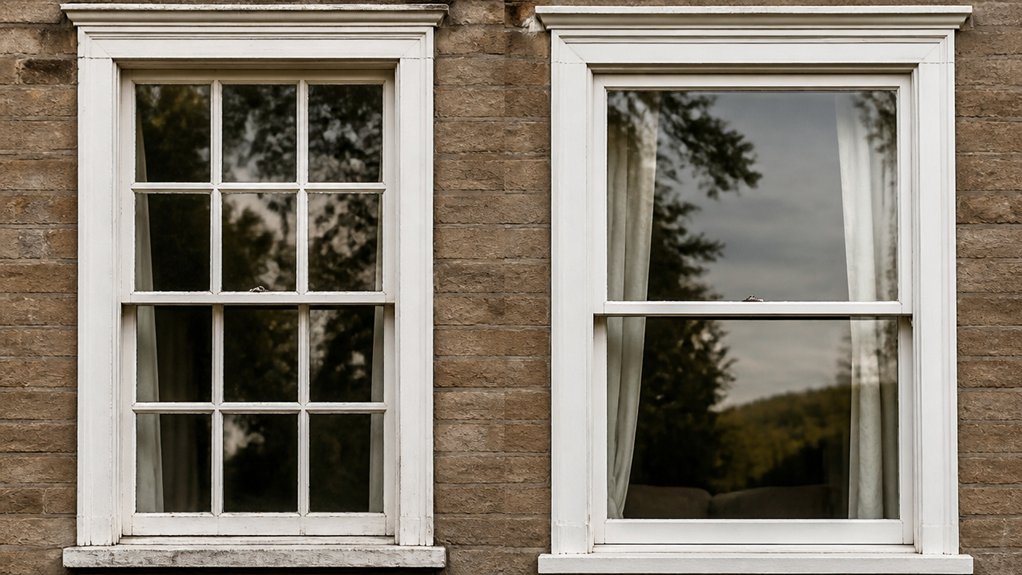
When you examine early sashes, you’ll see that small panes weren’t a stylistic choice alone; they were a direct response to the limits of available glass.
Crown glass came in imperfect, size-restricted sheets, so makers used multiple narrow lights and robust frames to manage waste and structural stress.
Where larger clear openings weren’t practical, you’ll find leaded-light solutions bridging the gap between material constraints and usable daylight.
Small Panes, Big Frames
Because early glass could only be produced in relatively small, imperfect sheets, sash windows were built around many narrow panes set into heavy timber frames. You see the logic immediately: smaller lights reduced waste, simplified replacement, and let joiners control distortion.
The grid also gave your façade rhythm, so you could add decorative motifs without weakening the structure. Because the frame carried most loads, material durability mattered as much as glazing quality; well-seasoned wood resisted movement, kept joints tight, and supported repeated use.
When you choose this pattern in a historic property, you’re joining a practical tradition shaped by craft limits, not style alone. Those narrow divisions made early sashes dependable, repairable, and visually balanced for homes that valued order and restraint.
Crown Glass Constraints
Crown glass didn’t arrive as broad, uniform sheets; it came off the blower in a spun disc, then had to be cut around the characteristic central bull’s-eye and edge distortions. You can see why early sash makers favored narrow panes: they preserved usable glass and reduced waste.
That constraint shaped the six-over-six Georgian grid, where muntins managed irregular sizes and kept the window visually orderly. You also gained a practical benefit: smaller panes lowered stress on each lite, improving Material durability in service.
The result wasn’t just utility. Decorative patterns emerged from necessity, giving façades a disciplined rhythm that still reads as refined today. When you understand crown glass limits, you understand the shared language of early joinery, measured proportion, and craft that connects you to the period.
Leaded Light Solutions
Leaded lights solved another part of the glass problem by breaking a larger opening into small, individually set panes joined by flexible lead cames. You can see how that method reduced waste, tolerated irregular sheet sizes, and let joiners control proportion with precision.
In early sash work, you’d specify narrow lights where full panes weren’t practical, then brace the assembly with timber glazing bars and putty. The result wasn’t only functional; it also carried decorative motifs, from diamond quarries to simple geometries that suited your house’s status.
Today, modern manufacturing can imitate this look with tighter tolerances, but the original system came from necessity. If you’re restoring or specifying period windows, you’re working within that same logic: glass limits shape design, and design shapes identity.
Why Edwardian Sashes Became One-over-One
You’ll see Edwardian sashes shift to one-over-one because larger glass panes let in more light and reduce visual interruption.
As glassmaking improved, you could specify bigger panes with fewer muntins, which also simplified fabrication. That change improved production efficiency and aligned with the era’s push for cleaner, more open window design.
Larger Panes, Better Light
As glassmaking improved in the late Victorian and Edwardian periods, manufacturers could produce larger, flatter panes at lower cost, and that shift made the one-over-one sash both practical and desirable.
You gain more uninterrupted daylight because fewer glazing bars interrupt the opening, so rooms feel brighter and more spacious. That cleaner expanse also sharpens sightlines to the street and garden, giving your home stronger aesthetic appeal.
In technical terms, a single large pane reduces frame area relative to glass area, which can support better energy efficiency when the sash fits tightly and the glazing is maintained well.
If you value period character, this form still belongs to the Edwardian language of restraint, clarity, and improved performance.
Mass Production And Efficiency
Mass production pushed the one-over-one sash from a stylistic choice into a practical standard. You benefit from factory-cut timber, uniform glass, and repeatable joinery that cut labor time and lowered cost.
Instead of assembling many small panes with dozens of glazing bars, manufacturers could turn out larger sashes faster and with fewer defects. That efficiency aligned with Edwardian building demands, where you wanted light, speed, and consistency.
Historical craftsmanship didn’t disappear; it adapted to machine-made precision and cleaner profiles. In modern restoration, you still see this logic: fewer parts, simpler repairs, and easier matching of dimensions.
When you choose a one-over-one sash, you’re joining a tradition shaped by industry, not abandoning heritage.
One-over-One Edwardian Sash Design
The one-over-one Edwardian sash design replaced the multi-pane Georgian pattern with a single glazed pane in both the upper and lower sashes, creating a cleaner opening and admitting more daylight. You get a broader sightline, fewer glazing bars, and a lighter visual rhythm that suits Edwardian rooms.
Designers often kept subtle Decorative motifs in the frame profiles, so you can preserve character without crowding the glass. Material durability matters here: you should specify seasoned timber or comparable stable stock to limit warping and maintain smooth sash travel.
This layout also supports tighter joinery and easier cleaning, which helps your windows stay practical in daily use. If you want a period-accurate upgrade that feels refined and familiar, this format gives you that balance.
How Mass Production Changed Sash Windows
Industrial production transformed sash windows by standardizing parts, reducing handwork, and cutting joinery time. You benefit from repeatable dimensions, so frames, stiles, rails, and meeting rails fit with less adjustment.
Factories could stamp sash hardware, machine pulleys, and prefit cords faster than a workshop could hand-make them. That shift lowered cost and made consistent quality easier to deliver across many homes.
You also got slimmer decorative moldings produced in batches, which helped crews finish openings with speed and uniformity. Because parts arrived ready to assemble, installers could work faster and keep repairs simpler.
If you value dependable workmanship, mass production gives you a sash system that’s precise, scalable, and easier to maintain within a shared architectural tradition.
Georgian vs Edwardian Sashes: Quick Comparison
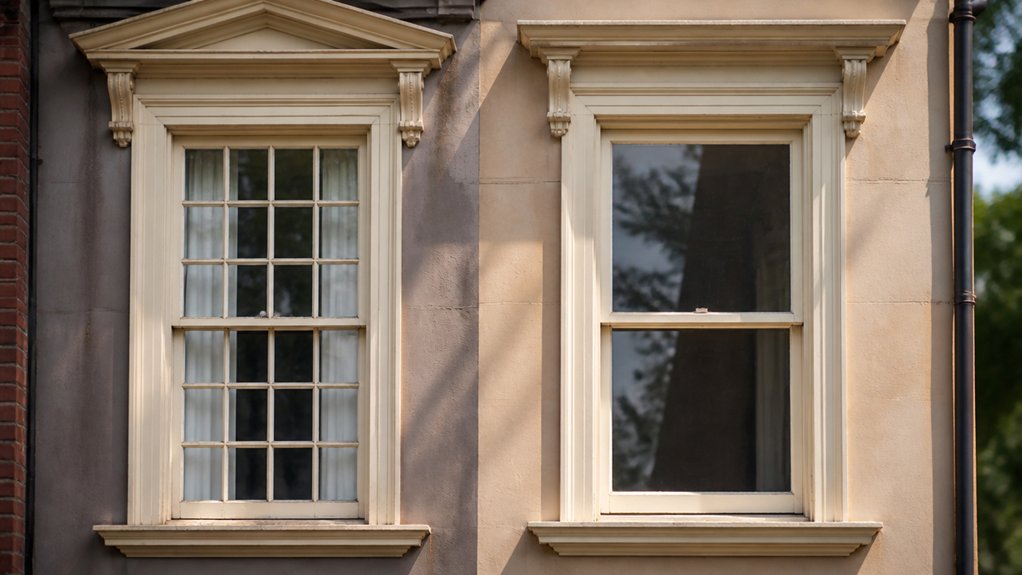
When you compare Georgian sashes, you’ll see a six-over-six layout with narrow glazing bars, small panes, and a balanced, symmetrical profile.
Edwardian sashes simplify that format with larger panes, fewer bars, and a cleaner, more open appearance.
You can use these features to distinguish the two styles quickly and accurately.
Georgian Sash Features
What sets a Georgian sash apart? You’ll notice the six-over-six grid: six small panes above, six below, divided by slender glazing bars. That arrangement gives you strong Architectural symbolism, signaling order, symmetry, and refinement.
In Interior design, it frames rooms with disciplined proportions, so your space feels balanced and anchored. You’ll also see meeting rails aligned at the center, crisp timber profiles, and a restrained, formal appearance that suits classical facades.
When you choose this sash, you join a tradition built on visual discipline rather than ornament. It’s not just a window; it’s a precise architectural language.
That’s why Georgian sashes remain a clear marker of heritage, craft, and belonging in period homes.
Edwardian Sash Features
By contrast, an Edwardian sash typically uses a one-over-one configuration: a single large pane above and below, with fewer glazing bars and a lighter visual weight. You get broader daylight, cleaner sightlines, and a more restrained façade that suits early twentieth-century taste.
In Historical craftsmanship, joinery still matters: slimmer stiles, precise meeting rails, and well-fitted weights keep the sash running true.
For Modern restoration, you’ll balance authenticity with performance, selecting discreet draught seals, sympathetic glass, and durable finishes.
Compared with Georgian six-over-six patterns, Edwardian sashes reduce visual complexity without losing proportion. If you’re matching a period property, this design helps you belong to its architectural language while meeting current expectations for comfort, efficiency, and longevity.
Where To Find Each Style in Historic Homes
To identify these sash styles in historic homes, start with the building’s construction date and original architectural character: six-over-six windows commonly appear in Georgian and early Federal houses, especially symmetrical brick dwellings from the 1700s and early 1800s.
While one-over-one sash is more typical of later Victorian, Queen Anne, and Edwardian-era homes built after standard machine-made glass became common. You’ll usually find six-over-six sash in formal front elevations, refined townhouses, and houses with strong classical detailing.
One-over-one windows often sit in more exuberant homes, suburban villas, and early twentieth-century facades. When you look inside, tie each pattern to interior decoration and spatial hierarchy.
The historical significance lies in how each sash marks an era’s building technology, proportions, and social taste, helping you recognize the home’s authentic architectural voice.
Choosing the Right Sash Style for Restoration
Choosing the right sash style for restoration starts with matching the window to the house’s documented period, surviving fabric, and local precedent. You should preserve original profiles, glazing patterns, and meeting rails whenever possible, because those details anchor authenticity.
If later alterations conflict with the building’s character, you can revert to the earlier configuration, but only after verifying evidence. Specify timber species, putty lines, and sightlines that align with the historic sash. Retain or reproduce decorative hardware in the correct finish and pattern, since it confirms the era and user experience.
Plan sash maintenance around paint cycles, cord replacement, and weatherstripping so the restored units operate smoothly. When you choose carefully, you join a community of stewards who value precision, continuity, and informed conservation.
About the Author


