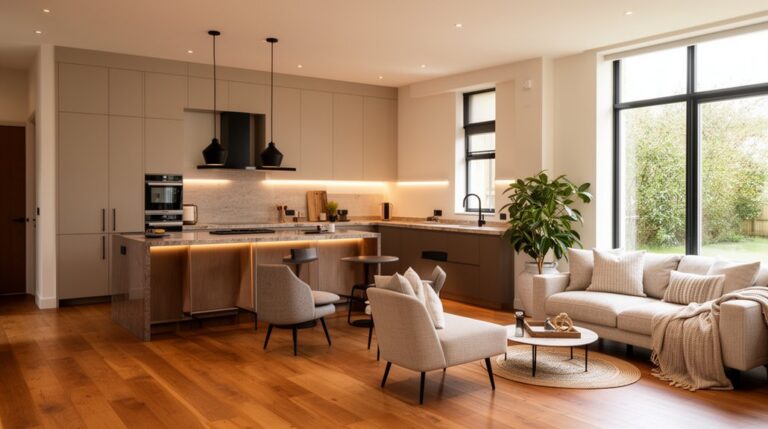
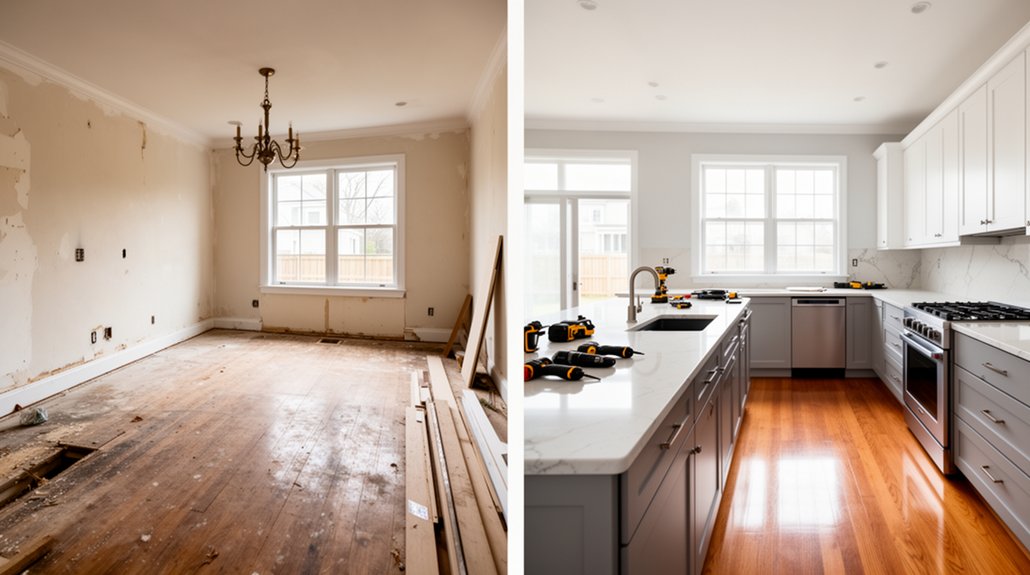
Every upgrade you choose is a lever, quietly shifting your profit margins and timeline. If you define your flip strategy early, you can focus on high-ROI improvements—like lighting, paint, and kitchen updates—that buyers notice and appraisers value. You cut waste by skipping low-impact work and aligning with local comps. The real advantage shows up when your property moves faster than the competition…
Key Takeaways
- Prioritize high-ROI upgrades like kitchens and bathrooms that align with local comps to increase resale value without overbuilding.
- Use prefinished, standardized materials to reduce labor time, avoid delays, and keep installation fast and predictable.
- Focus on cosmetic, buyer-visible improvements like paint, lighting, and flooring that photograph well and drive faster offers.
- Order long-lead items early and tightly schedule trades to minimize downtime and shorten the overall renovation timeline.
- Eliminate low-impact upgrades and track cost versus value to protect margins and ensure every dollar contributes to resale price.
Choose a Flip Strategy Before Renovating

Why does your flip strategy need to come before a single swing of a hammer? Because your profit lives or dies by decisions you lock in early. You use market research to define your buyer, price band, and acceptable risk, then align scope and budget to those constraints. That clarity keeps you from overbuilding or chasing comps that don’t support your numbers.
When you set a tight project timeline, you control holding costs, financing drag, and exposure to market shifts. You’re not guessing; you’re operating like the investors you want to stand beside.
A defined strategy creates shared language with contractors, lenders, and agents, so everyone moves in sync and protects margin and keeps your returns predictable across deals in changing neighborhoods over time.
Identify High-ROI Upgrades for Flips
With your strategy set, you can target upgrades that raise resale value more than they cost. You should benchmark local comps, track cost-per-square-foot gains, and focus on improvements with predictable returns.
Kitchens and baths still lead ROI, but only when you control scope and materials. Energy-efficient systems, durable flooring, and neutral finishes typically outperform trend-driven installs in midrange markets.
You can layer in selective luxury features and smart home technology where buyers pay a measurable premium. Think app-controlled thermostats, security, and lighting bundled at low install cost.
Use recent sales data to validate each upgrade, aim for at least a 1.5x return, and cut anything that doesn’t clear that bar to protect margins.
Stay disciplined with budgets, timelines, and contractor bids to avoid overruns.
Prioritize Buyer-Visible Improvements
Although structural upgrades matter, buyers make snap judgments based on what they can see, so you should prioritize finishes and features that photograph well and show clean, modern, and move-in ready. You’ll get faster showings and stronger offers when surfaces look new: fresh paint, updated lighting, cohesive flooring, and crisp landscaping consistently lift perceived value relative to cost.
Use virtual staging to help online shoppers visualize scale and lifestyle, boosting click-through and tour rates without heavy spend.
Add smart home technology like app-controlled thermostats, keyless entry, and video doorbells; they’re inexpensive, signal modernity, and test well in comps.
Keep palettes neutral, hardware consistent, and sightlines uncluttered so photos pop and buyers feel they belong the moment they walk in. That’s how you win locally.
Skip Renovations That Don’t Add Value
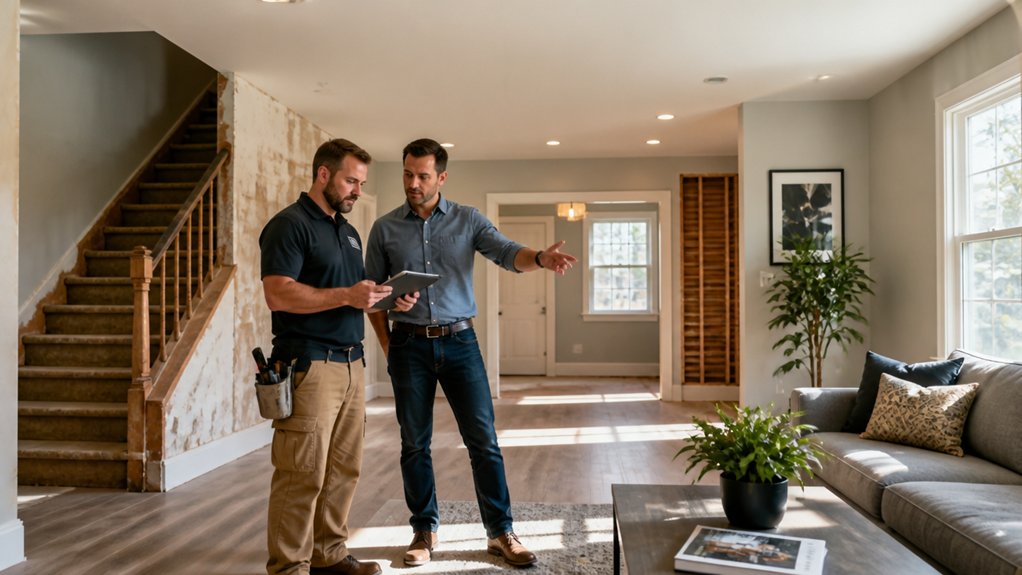
Because every dollar needs to earn a return, you should cut any renovation that won’t move comps, appraisal value, or buyer demand in your specific market.
You protect margins by avoiding luxury features and extensive landscaping that rarely recoup costs in midrange neighborhoods. Study local sales data and contractor bids to identify upgrades buyers actually price in.
If a project doesn’t lift ARV or shorten days on market, skip it and reallocate budget to high-visibility fixes. You stay competitive by matching neighborhood standards, not exceeding them.
That discipline keeps timelines tight, reduces carrying costs, and signals you operate like seasoned investors in your market.
Avoid overimproving for comps you won’t reach; buyers won’t pay premiums for mismatched upgrades in your submarket today right now.
Upgrade Kitchens for Faster Sales
How much does a kitchen move your ARV and days on market? In most comps, updated kitchens drive 8–15% higher resale and cut weeks off listing time.
You should target midrange upgrades with clear ROI: refaced cabinets, durable quartz, modern lighting, and cohesive finishes. Keep layouts functional; avoid costly relocations unless comps justify it.
Buyers expect Smart technology and energy efficiency, so add app-controlled appliances, LED fixtures, and efficient dishwashers that signal lower ownership costs.
Price your scope against neighborhood ceilings and investor benchmarks. Spend where buyers notice first and appraisers can quantify.
When your kitchen aligns with local expectations, you don’t just renovate—you position your flip to sell faster, compete confidently, and protect margin.
Track bids tightly and lock timelines to avoid overruns.
Upgrade Bathrooms for Higher Offers
While kitchens anchor value, bathrooms often seal the deal, nudging buyers to stretch their offers and reducing inspection friction. You boost ROI by targeting high-impact updates buyers notice and appraisers recognize. Swap dated vanities for clean-lined options, install luxury fixtures, and standardize finishes for cohesion across the home.
Aim for spa-like features—frameless glass showers, rainfall heads, and neutral tile—that signal move-in readiness. Keep costs tight: midrange bath remodels often recoup 60–70%, but smart material sourcing can push margins higher.
Prioritize lighting, ventilation, and water efficiency to avoid inspection flags and future concessions. When your bathrooms feel current and consistent, you strengthen comps, shorten days on market, and position your flip within the competitive set buyers trust and attract stronger offers from qualified buyers.
Boost Curb Appeal to Attract Buyers
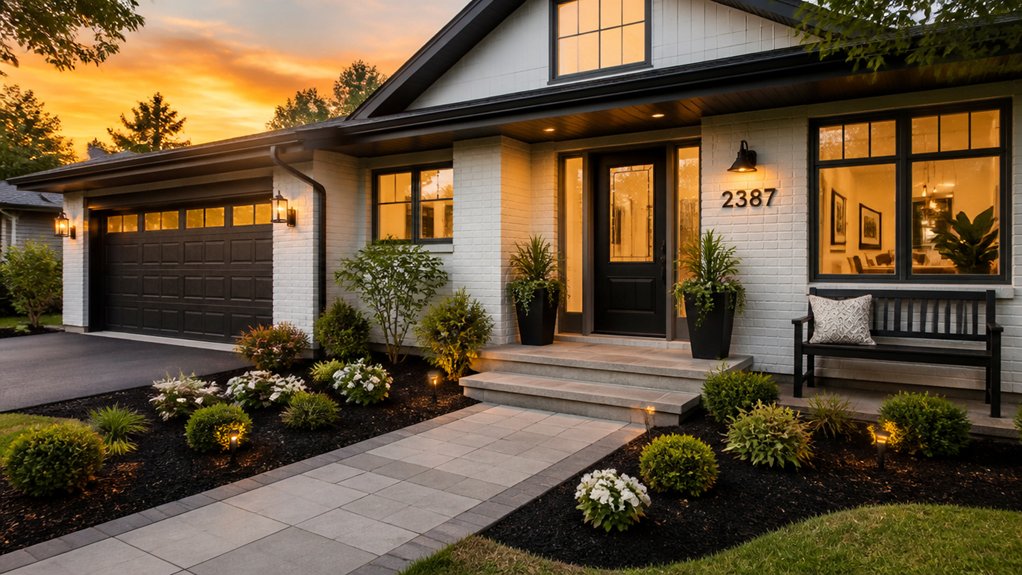
Why does curb appeal move offers before buyers even step inside? Because buyers price confidence at the curb, and you can engineer that signal cheaply.
Focus on landscaping enhancements that frame the entry, define lines, and photograph well. Trim costs by choosing drought-tolerant plants and mulch for fast coverage with low maintenance.
Layer exterior lighting options to extend showing hours and highlight architectural features; LEDs keep utility costs down. Replace dated hardware, refresh the mailbox, and guarantee numbers are visible from the street.
You’re not decorating—you’re de-risking the purchase. In competitive comps, strong first impressions can lift perceived value and shorten days on market, helping your flip attract the right buyers quickly.
Benchmark nearby listings and invest where returns exceed typical neighborhood expectations today.
Use Paint and Flooring for Quick Wins
You’ll get outsized ROI by choosing neutral, high-demand paint palettes that photograph well and match current buyer preferences.
Pair that with fast, cost-efficient flooring upgrades—like LVP or refaced hardwood—that reduce install time and minimize holding costs.
These updates signal move-in readiness, helping you price competitively and shorten days on market.
High-Impact Paint Choices
How much value can a few gallons of paint and updated flooring add? In most markets, strategic paint delivers one of the highest ROI upgrades, often recouping over 100% at resale. You win by applying color psychology: warm neutrals widen appeal, soft whites brighten photos, and muted accents create memory without risk.
Choose finishes with proven paint durability so scuffs don’t telegraph neglect during showings. You’re not just covering walls; you’re signaling quality to buyers who want to feel they belong the moment they walk in. Standardize palettes across rooms to reduce visual noise and speed decision-making.
Spend where it shows—entry, kitchen, primary suite—and control costs with contractor-grade lines that still photograph clean and consistent. Test swatches in natural light to confirm buyer-friendly tones.
Fast Flooring Upgrades
Where do fast flooring upgrades move the needle most? In entryways, kitchens, and living areas where buyers form price anchors within seconds. You cut days by choosing click-lock LVP or prefinished hardwood over site-finished options, saving 2–5 labor days and reducing holding costs.
Aim for mid-tier luxury materials looks without premium install time; wide-plank visuals and matte finishes photograph well and match current comps.
You boost ROI by standardizing SKUs across units, negotiating volume pricing, and avoiding custom designs that slow crews. Keep color palettes cohesive with your paint strategy, limit changeovers, and use durable underlayment to reduce callbacks.
Done right, you’ll shorten days-on-market and protect margins while delivering a finish your buyers recognize and trust. This approach keeps crews aligned and timelines predictable.
Budget Upgrades to Protect Your Profit
While big-ticket renovations grab attention, disciplined investors know that targeted, low-cost upgrades often deliver stronger returns by tightening your margin and reducing buyer objections.
You protect profit by choosing cost-effective materials that mimic premium finishes without the price tag, like LVP over hardwood or quartz-look laminate. You also stay market-aware, matching finishes to neighborhood comps instead of overbuilding.
Smart renovation timing helps you buy in bulk, avoid rush pricing, and keep crews efficient. Focus on high-visibility fixes—fresh paint, updated lighting, modern hardware—that influence buyer perception and appraisal support.
Track spend per square foot, compare against local resale data, and cut anything that doesn’t move value. This is how disciplined flippers stay competitive and consistent.
You keep deals predictable and margins protected across cycles.
Time Renovations to Avoid Project Delays
Tight cost control only works if your schedule holds, so timing each phase of the renovation becomes a profit lever. You reduce holding costs when you align crews, permits, and materials with timing strategies. Start with critical path tasks, then layer nonessential upgrades where float exists.
Smart renovation scheduling means ordering long-lead items before demo ends and booking trades weeks ahead, not days. Track days on market and interest carry to quantify delay risk, then prioritize tasks that facilitate inspections and appraisals.
You stay competitive by finishing when buyers are most active, not when contractors are free. Build buffers for inspections and weather, but cut idle gaps between trades. When your timeline is predictable, your margins stop leaking and your flip stays on target.
About the Author