

If you’re trying to date an antique fireplace surround, you can usually narrow it down by style, material, and ornamentation. Georgian pieces tend to be restrained and symmetrical, Victorian examples are richer and more decorative, and Edwardian surrounds usually sit somewhere between the two with lighter, cleaner lines. The details can be subtle, though, and a closer look often reveals more than the overall shape suggests.
Key Takeaways
- Georgian surrounds are symmetrical, restrained, and classical, with crisp lines, simple mantels, and elegant columns or pilasters.
- Victorian surrounds are heavier and more decorative, often featuring carved scrolls, floral motifs, bold mouldings, and paired supports.
- Edwardian surrounds are lighter and cleaner, with shallow garlands, subtle swags, geometric panels, and simpler mouldings.
- Material can help identify the period: Georgian uses refined stone, marble, or wood; Victorian often uses cast iron, marble, slate, or timber.
- Inspect carving, joints, wear, and soot marks for authenticity, and distinguish hand-finished details from later machine-made replacements.
How Do Georgian, Victorian, and Edwardian Fireplaces Compare?
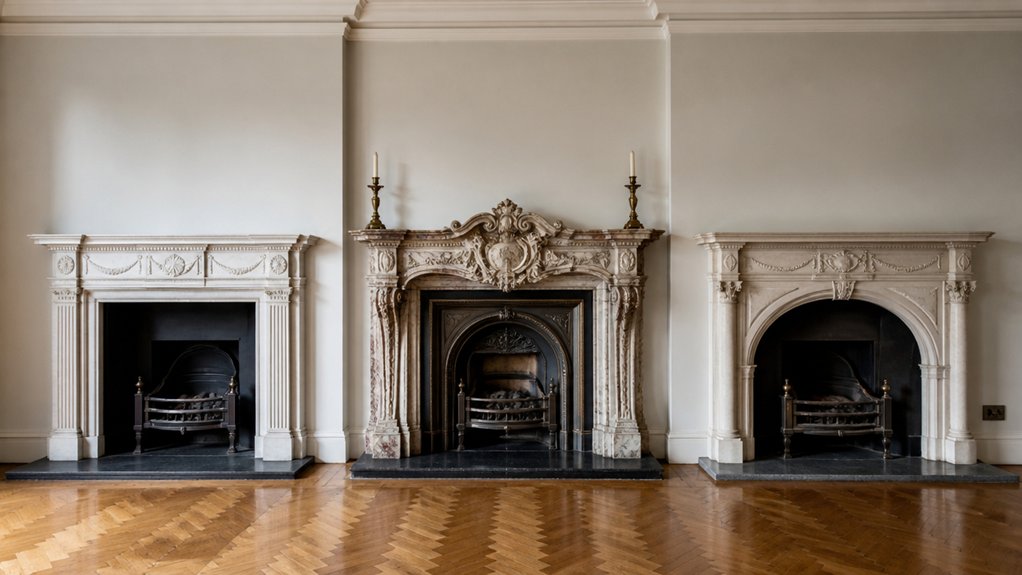
If you’re comparing antique fireplace surrounds, Georgian, Victorian, and Edwardian designs are easiest to distinguish by proportion, ornament, and overall form.
In historical context, Georgian examples usually feel restrained and balanced, with clean lines that suit classical architectural influences.
Victorian surrounds often look richer and more dramatic, reflecting industrial-era confidence, so you’ll notice heavier detail, deeper profiles, and stronger contrast.
Edwardian pieces sit between the two: they soften Victorian excess while keeping a refined, lighter presence.
When you assess a surround, trust the room’s cues and your eye for harmony.
You’ll fit right in when you recognize how each period responds to its own taste, technology, and social ideals, and that confidence helps you identify what belongs in your space.
What Defines a Georgian Fireplace Surround?
A Georgian fireplace surround usually shows symmetry, restraint, and classical proportion, with design cues drawn from Palladian and Neoclassical architecture. You’ll usually see a balanced opening, a simple mantel shelf, and crisp lines rather than heavy ornament.
Historical design influences favor elegant columns, pilasters, or a plain entablature that feels measured and formal. When you inspect Material and craftsmanship, look for stone, marble, or wood finished with care, because the details should feel refined, not showy.
You belong to a tradition that values order and proportion, so trust your eye: Georgian pieces look composed from every angle. If the surround feels dignified, understated, and carefully made, you’re likely looking at a true Georgian example.
How to Spot a Victorian Fireplace Surround
Victorian fireplace surrounds usually look richer, more decorative, and more varied than Georgian examples, so you should expect stronger ornament and a less restrained profile. You’ll often spot carved scrolls, floral motifs, bold shelf mouldings, and paired columns or pilasters that frame the opening.
Check for cast iron, marble, slate, or timber, then assess material durability by looking for tight joints, crisp edges, and minimal warping. Good examples show artisan craftsmanship in the carving, casting, and finish, even if the design feels busy.
You belong to the right track when the surround feels intentional, substantial, and proudly detailed. Compare the scale with the room too; Victorians often used a showier presence to anchor the hearth without losing balance.
What Makes an Edwardian Fireplace Surround Different?

Edwardian fireplace surrounds usually look lighter, cleaner, and less ornate than Victorian examples, with straighter lines, simpler mouldings, and a more balanced, airy profile. You’ll often notice restrained decorative motifs, such as shallow garlands, subtle swags, or modest geometric panels, rather than dense carving.
Material differences also help you feel confident: many Edwardian surrounds use painted timber, smooth stone, or polished marble with a quieter finish. If you want a surround that suits a room without dominating it, Edwardian design gives you that calm, refined presence.
You’re looking at a style that values proportion, clarity, and elegance over display, so it often fits well with homes where you want heritage character and a sense of belonging.
How to Identify an Antique Fireplace Surround by Features
To identify an antique fireplace surround by its features, start by examining the profile, mouldings, and decorative detailing, because these often reveal the period more clearly than the overall shape.
Look for Georgian restraint, Victorian ornament, or Edwardian lightness in the cornice, jambs, and frieze.
Check whether the proportions feel balanced and whether the carving is hand-finished or machine-made.
Inspect joints, surface wear, and soot marks to judge age and use.
Compare stone, marble, or cast iron for Material durability and later repairs.
If you see mismatched elements, note any replacement parts before assuming the surround is original.
Use careful Restoration techniques when cleaning so you don’t erase the clues that confirm authenticity.
With practice, you’ll read these details confidently and feel part of an informed circle.
About the Author


