You may not realize how quickly small home issues turn into expensive repairs if you ignore them. When you tighten loose hardware, stop a leaky faucet, patch a crack, or seal a draft, you’re protecting both comfort and structure. These fixes don’t take much time, but they do keep your home running well. The trick is knowing which jobs you can handle yourself and which ones need a closer look.
Key Takeaways
- Tighten loose cabinet hardware, hinges, and fittings to prevent wear and keep doors and fixtures working smoothly.
- Patch small holes and scuffs with spackle, then sand and touch up paint for a clean finish.
- Replace worn weatherstripping and caulk gaps around trim, doors, and windows to stop drafts and moisture.
- Fix minor plumbing leaks by checking washers, O-rings, flappers, and loose connections, then replace worn parts promptly.
- Lubricate squeaky door hinges and clean mineral buildup from faucet parts to maintain easy operation and extend lifespan.
Simple Home Repairs Every Homeowner Can Do

Before you call a professional for every little issue, you can handle a surprising number of common home repairs yourself with a few basic tools and a little patience. Start with home maintenance tasks that build confidence: tightening loose cabinet hardware, patching small nail holes, replacing worn weatherstripping, and touching up scuffed trim. These fixes protect your space and keep it looking cared for.
Keep a compact set of DIY tools ready, including a screwdriver, putty knife, utility knife, hammer, tape measure, and painter’s tape. When you spot minor damage, address it right away so it doesn’t grow into a bigger problem.
You’re not just fixing things; you’re joining a capable group of homeowners who know how to keep a house running smoothly and well.
Fix Leaky Faucets and Running Toilets
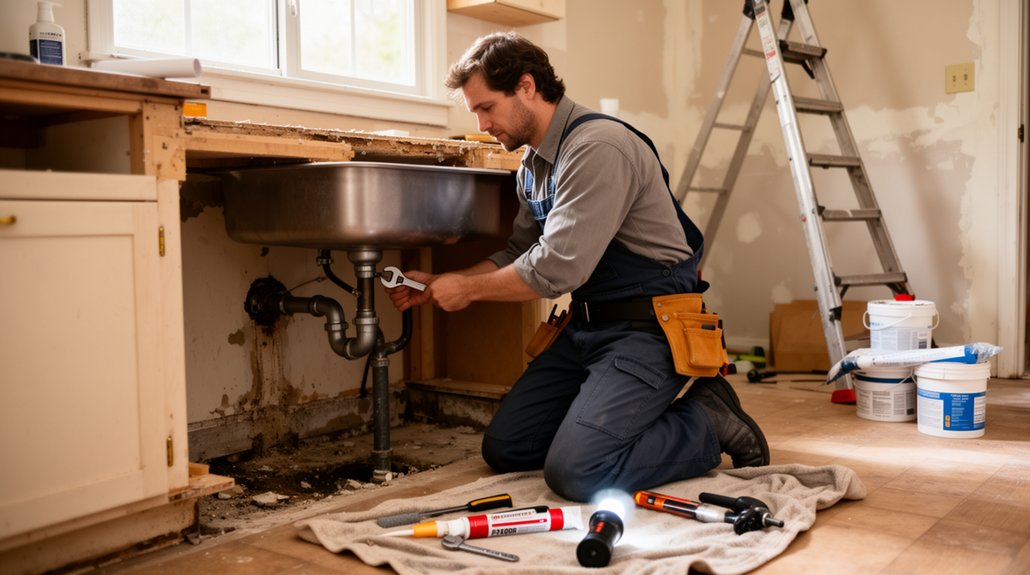
A dripping faucet or a toilet that won’t stop running can waste water fast, but you can often fix both with basic tools and a little patience. Start with leak detection: shut off the water, inspect washers, O-rings, and the flapper, then replace worn parts before they cause bigger problems.
For faucets, remove the handle, clean mineral buildup, and tighten fittings without overdoing it.
For toilets, check the fill valve and adjust the float so the tank stops at the right level.
Good plumbing maintenance saves money, protects your fixtures, and keeps your home working the way it should. If you handle these repairs early, you’ll stay ahead of damage and feel confident tackling the next fix with the rest of the home crew.
Patch Small Holes and Cracks in Walls
Once you’ve handled a few basic plumbing fixes, you can move on to the small wall damage that shows up from everyday wear and tear. Clean the area first, then use lightweight spackle or filler to fill nail holes and hairline cracks. Press it in firmly, let it dry, and sand it smooth so it blends with the surrounding surface.
If your wall has Wall texture, match it before you paint so the repair doesn’t stand out. For deeper dents, apply a second thin coat instead of overfilling. Finish with a careful Paint touch up using a small brush or roller.
When you take your time, your walls look cared for, and your home keeps that lived-in, well-kept feel your family and guests notice.
Fix Squeaky Doors and Hinges
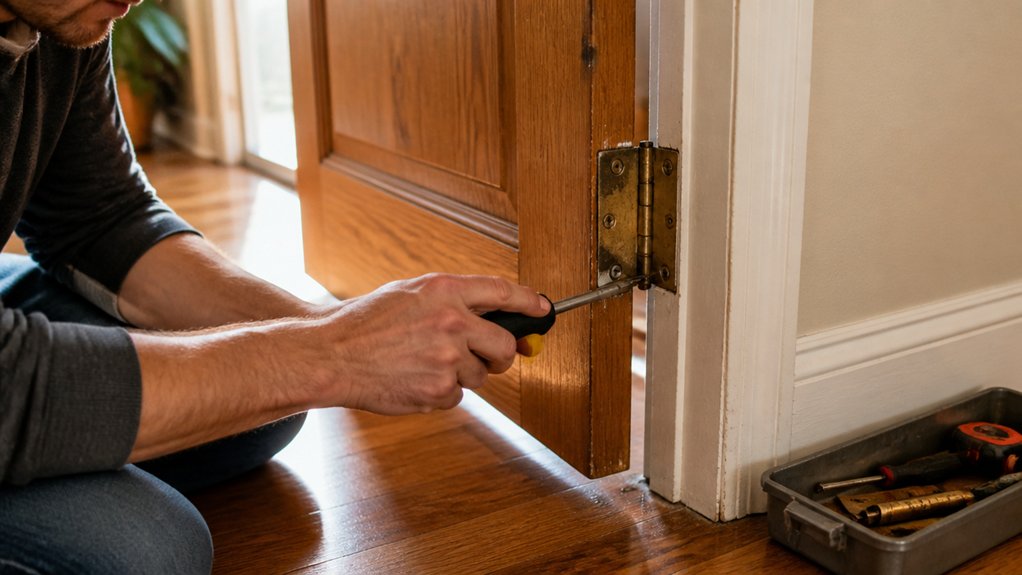
When a door starts squeaking, it’s usually telling you the hinges need attention, not replacement. You can fix it fast with basic door hinge lubrication and a few careful steps.
First, swing the door open and closed to pinpoint the noisy hinge. Then place a drop or two of oil, silicone spray, or another suitable lubricant at each hinge pin and knuckle. Work the door several times so the lubricant spreads evenly and the squeak disappears.
If the sound lingers, wipe away buildup, tap out the pin, and clean it before reinstalling. Tighten any loose screws while you’re there.
This quick squeak elimination task keeps your home quieter, helps your doors feel solid, and gives you the satisfaction of handling a common repair like a pro.
Seal Drafts With Caulk and Weatherstripping
After you’ve taken care of noisy hinges, you can tackle another easy fix that improves comfort and cuts energy loss: sealing drafts around windows, doors, and other gaps. Inspect trim, baseboards, and plumbing penetrations, then run paintable caulk along cracks smaller than a quarter inch.
For wider openings, use backer rod before caulk. Add weatherstripping to door jambs and window sashes so they close snugly without sticking. You’ll boost energy efficiency, reduce outside noise, and improve indoor comfort in every season.
Choose materials rated for the surface and climate, and clean the area first so the seal lasts. This is a smart weekend project that helps your home feel tighter, more dependable, and more like a place where everyone can relax together.
About the Author