
You may not realize that the cheapest energy upgrade often isn’t a new system but stopping hidden air leakage first. When you seal drafts, add insulation, and control heating with a smart thermostat, you can cut losses before spending on major equipment. From there, better windows, LEDs, and efficient appliances build on those gains. The key is choosing upgrades that lower bills now while preparing your home for what comes next.
Key Takeaways
- Seal air leaks and add insulation to reduce heat loss, improve comfort, and lower energy waste.
- Upgrade to high-efficiency heat pumps, smart thermostats, and zoned HVAC for precise, efficient climate control.
- Replace old windows and exterior doors with insulated, low-E options to cut drafts and stabilize indoor temperatures.
- Install LED lighting, occupancy sensors, and smart home controls to eliminate unnecessary electricity use.
- Add solar panels and efficient water-heating upgrades after reducing demand to maximize long-term savings.
What Energy-Saving Upgrades Cut Bills Fastest?

The fastest energy-saving upgrades are usually the ones that reduce the biggest losses first: air sealing, attic insulation, and high-efficiency HVAC controls. You’ll usually see the quickest bill cuts when you target heating and cooling loads, because they drive most home energy use.
Pair that with smart thermostat scheduling, duct balancing, and routine appliance maintenance to keep equipment running at rated efficiency. If you’ve already handled those basics, switch to LED lighting, heat pump water heating, and ENERGY STAR appliances for steady savings.
Renewable energy, like rooftop solar, can further offset remaining costs, but it works best after you trim demand. When you sequence upgrades this way, you join a practical, cost-aware group of homeowners who get results fast.
Seal Air Leaks and Add Insulation
You can cut energy loss fast by finding air leaks around windows, doors, ducts, and penetrations, then sealing them with caulk or foam.
Upgrade insulation in the attic, walls, and floors to slow heat transfer and stabilize indoor temperatures.
Add weatherstripping to gaps at moving joints so your heating and cooling system doesn’t waste power compensating for constant infiltration.
Air Leak Detection
Where are your biggest energy losses hiding? You can find them with a blower door test, smoke pencil, or even a simple tissue check around windows, doors, outlets, and attic hatches.
When you locate leaks, you’ll cut drafts, stabilize room temperatures, and protect Indoor air quality by limiting uncontrolled outside air. You’ll also improve ventilation efficiency, since your mechanical system won’t have to fight random leakage.
Inspect plumbing penetrations, recessed lights, duct connections, and rim joists; these spots often need caulk, weatherstripping, or foam.
Work methodically, starting with the largest gaps, and verify results after each fix.
In a well-tuned home, you and your household feel the difference: fewer cold spots, quieter rooms, and lower energy waste.
Insulation Upgrades
Once you’ve sealed major air leaks, insulation becomes the next line of defense against heat loss and gain. You should prioritize the attic, exterior walls, crawl spaces, and basement rim joists, because these areas usually deliver the biggest return.
Choose insulation types by climate, assembly, and available depth: fiberglass batts, blown-in cellulose, spray foam, or rigid foam each solve different problems. You’ll improve comfort when you raise R-values and reduce thermal bridging through framing, joists, and studs.
For best results, keep coverage continuous and match materials to the cavity. When you upgrade together with your neighbors and local trades, you’re joining a smarter, more resilient community that wastes less energy and feels better year-round.
Weatherstripping Gaps
Weatherstripping closes the small, persistent gaps around doors and windows that insulation alone can’t fix, cutting drafts, moisture intrusion, and unwanted heat transfer. You’ll get the best results when you inspect weatherstripping gaps with a flashlight on a windy day, then replace worn material with foam, V-strip, or compression seals matched to each opening.
Clean surfaces first so adhesive bonds hold, and press strips firmly for continuous contact. This is practical draft prevention that improves comfort, lowers HVAC runtime, and helps your home feel well cared for.
When you join neighbors who seal leaks early, you protect finishes, reduce strain on equipment, and add another layer of insulation where it counts most. Seal now, save energy, and stay comfortable year-round.
Upgrade Windows and Exterior Doors
If your home leaks air around old windows and exterior doors, upgrading these openings can deliver some of the biggest energy savings. You’ll improve comfort by specifying insulated frames, double- or triple-pane glass, low-E coatings, and tight weather seals.
Choose products with strong Window durability so they resist warping, condensation, and repeated use. For exterior doors, pick insulated cores, reinforced jambs, and quality thresholds to limit infiltration.
You’ll also protect your home’s exterior aesthetic by matching profiles, colors, and hardware to your existing architecture, which helps your home feel cohesive in the neighborhood.
Ask for professional measurement and installation, because even high-performance units underperform when gaps remain.
With the right upgrade, you’ll cut drafts, reduce heat loss, and join homeowners who value efficient, well-built homes.
Choose a Smart Thermostat
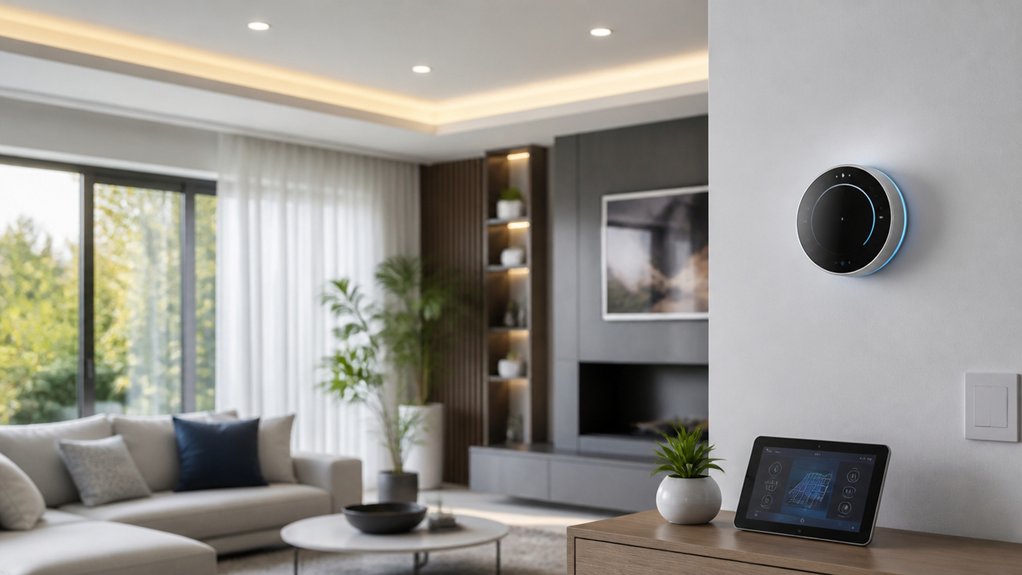
After sealing leaks at windows and exterior doors, the next high-impact upgrade is a smart thermostat that helps your HVAC system run only when needed. You can set schedules that match your routine, so your home stays comfortable without wasting energy.
Look for remote temperature control, learning algorithms, and geofencing, because these features cut runtime when you’re away and restore comfort before you return. Voice command integration also makes adjustments fast, especially when your hands are full.
Choose a model that works with your current system, supports clear energy reports, and lets you fine-tune setbacks by degree. When you use it well, you join a smart-home community that values efficiency, control, and a more resilient home.
Upgrade Heating and Cooling Systems
You can cut energy use by upgrading to a high-efficiency heat pump, which moves heat more effectively than older systems and typically delivers stronger performance with lower operating costs.
Pair it with smart thermostat controls so you can fine-tune schedules, reduce runtime, and keep temperatures stable without wasting power.
If your home has uneven temperatures, zoned HVAC systems let you condition only the spaces you’re using, which improves comfort and trims unnecessary load.
High-Efficiency Heat Pumps
High-efficiency heat pumps can cut heating and cooling costs by moving heat rather than generating it, making them one of the most effective upgrades for year-round comfort. You get steady performance in one system, and that helps your home feel consistent through hot and cold seasons.
Compare air-source models with geothermal heating if you want top-tier efficiency and a smaller operating footprint. For even better comfort, pair the system with radiant cooling or low-temperature emitters, which let the equipment run at peak loads.
You should size the unit correctly, seal ducts, and choose a qualified installer, because installation quality drives real-world savings. When you invest in this upgrade, you’re joining homeowners who value lower bills, reliable comfort, and smarter energy use.
Smart Thermostat Controls
Smart thermostat controls fine-tune heating and cooling by learning occupancy patterns, adjusting schedules automatically, and reducing wasted runtime when no one’s home. You gain tighter temperature control, lower utility bills, and a system that responds to your routine without constant manual input.
Set setback ranges, monitor humidity, and use remote access to verify comfort before you arrive. For climate adaptation, you can program deeper setbacks during extreme weather and rapid recovery before peaks in demand.
For renewable integration, align run times with solar output or off-peak electricity windows so your equipment works when power is cleaner and cheaper. Choose a model that reports usage clearly, supports geofencing, and integrates with your existing HVAC controls so you stay efficient and connected.
Zoned HVAC Systems
While thermostat automation trims wasted runtime, zoned HVAC systems improve the way conditioned air is distributed throughout the building. You gain precise zone control with dampers, sensors, and a smart controller that directs heating or cooling only where you need it.
That means your upstairs bedrooms can stay comfortable without overconditioning the living area, and your home won’t fight itself across floors. A properly designed Zoned HVAC setup can cut energy waste, reduce temperature swings, and relieve wear on compressors and blowers.
You’ll also feel more in sync with your household, since each space supports the people using it. Work with a qualified contractor to balance ducts, size equipment correctly, and confirm each zone responds fast and reliably.
Lower Water Heating Costs
Heating water can account for a large share of your energy bill, so small equipment and usage changes can deliver real savings. You can start with water heater maintenance: flush sediment yearly, inspect the anode rod, and insulate exposed hot-water pipes to reduce standby losses.
Then look at plumbing fixture upgrades; low-flow showerheads and faucet aerators cut hot-water demand without sacrificing comfort, so your household keeps its routines intact.
Set the tank to 120°F to balance safety and efficiency, and repair leaks promptly because even a slow drip wastes heated water.
If you’re replacing equipment, choose a high-efficiency unit sized to your actual usage. These steps help you lower operating costs while keeping your home practical, resilient, and ready for the future.
Switch to LED Lighting and Smart Controls

After tackling water-heating losses, look for the next easy win in your home’s electrical load: lighting. You can cut usage fast by replacing incandescent or halogen lamps with LEDs that deliver the same brightness at a fraction of the wattage.
Choose the right color temperature for each room: warm tones suit living areas, while cooler light supports task spaces. Then refine light placement so you illuminate surfaces, not empty corners.
Add dimmers, occupancy sensors, and timers to stop waste when rooms sit empty. Smart controls let you set scenes, track habits, and keep everyone in the home comfortable and coordinated.
When your lighting works efficiently and predictably, you join the group of homeowners who lower bills without giving up quality, control, or style.
Add Solar Panels for Long-Term Savings
Solar panels can turn your roof into a long-term energy asset by offsetting a meaningful share of your electricity use. When you evaluate Solar panel installation, check roof orientation, shading, structural capacity, and local incentives so you can size the array correctly.
A qualified installer will map your load profile and design for renewable energy integration with your service panel and utility interconnection requirements. That setup helps you join a growing group of homeowners who value resilience and lower operating costs.
You’ll usually see the strongest returns when you pair solid equipment with a warranty-backed design and a clean, code-compliant install. Over time, your system can stabilize costs, reduce grid dependence, and support a more future-ready home.
Improve Efficiency With Smart Appliances
You can cut energy waste by using smart appliances that track consumption in real time and expose usage patterns through smart energy monitoring.
Choose high-efficiency models that use less power and run more effectively under normal household loads.
Set automated usage schedules so devices operate during lower-cost or lower-demand periods without sacrificing performance.
Smart Energy Monitoring
Smart energy monitoring lets you track how much electricity your home uses in real time, so you can spot waste and adjust habits before costs climb. You can compare circuits, identify idle loads, and see how each device affects energy consumption throughout the day.
That data helps you schedule laundry, charging, and HVAC use when demand is lower, keeping your household running efficiently with everyone on the same page.
Smart alerts also support appliance maintenance by flagging unusual power draw before a fault becomes expensive. When you review trends weekly, you’ll make tighter decisions, reduce surprises, and build a more responsive home system.
For a connected household, this visibility turns small changes into steady savings without sacrificing comfort or control.
High-Efficiency Appliances
High-efficiency appliances cut energy use by doing the same work with less electricity, water, or gas, and modern models often add controls that adapt to load, cycle length, and usage patterns.
When you replace aging equipment, compare Energy labels, annual kWh, and water factors, not just purchase price. You’ll usually recover the premium through lower utility bills and fewer service calls.
Choose refrigerators, washers, dishwashers, and heat-pump dryers with strong efficiency ratings and features that match your household size.
Good appliance maintenance matters too: clean coils, clear filters, level units, and inspect seals to preserve performance.
When you buy smart, you join a community of homeowners who reduce waste, protect budgets, and keep homes comfortable without sacrificing capability or reliability.
Automated Usage Scheduling
Automated usage scheduling lets smart appliances run when electricity is cheapest, demand is lowest, or solar output is highest, which can trim bills without changing the task itself. You can pair your dishwasher, washer, water heater, and EV charger with utility price signals or home energy management software.
Dynamic scheduling adjusts start times automatically when rates, weather, or solar production change, so your home works with the grid instead of against it. Set personalized routines for comfort and convenience, then let the system handle the timing.
You’ll reduce peak loads, improve equipment efficiency, and support a cleaner neighborhood energy profile. For best results, connect devices on Wi-Fi, verify delay-start settings, and review schedules monthly to keep savings on track.
Plan Energy-Saving Upgrades on a Budget
Before you spend on any upgrade, map out which improvements will cut the most energy use per dollar. Start with an energy audit, then rank sealing air leaks, adding insulation, and upgrading lighting before larger capital projects.
Set a phased budget so you can complete high-return work now and defer slower payback items. If you’re choosing between systems, compare lifecycle cost, not just purchase price.
Pair smart thermostats and other Home automation tools with efficient controls to reduce waste automatically.
When cash flow allows, add Renewable energy options sized to your load, not your wish list.
Join neighbors who track utility bills and share contractor referrals; you’ll make better decisions, avoid overspending, and build a more resilient home together.
About the Author