
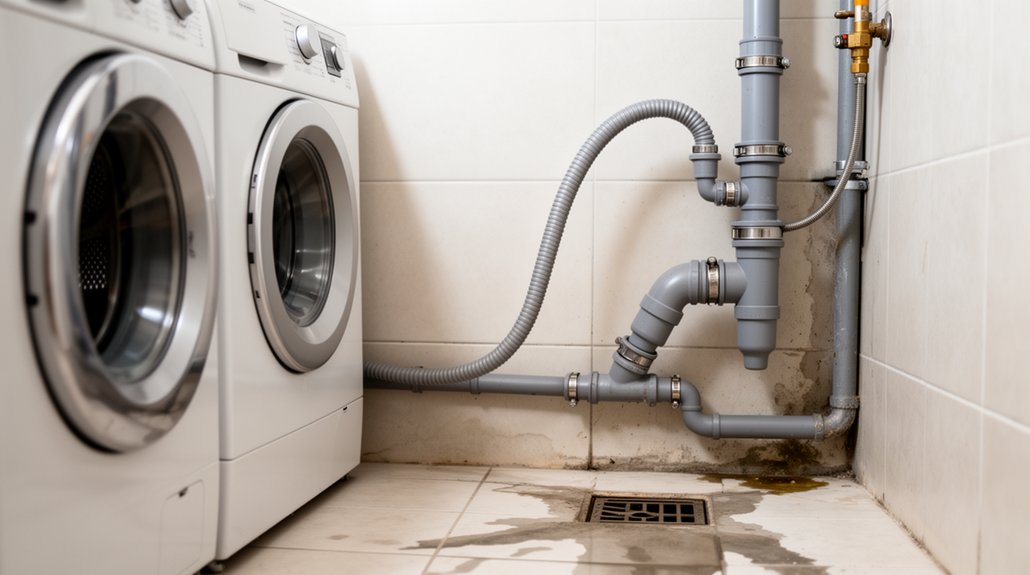
If your washing machine could talk, it’d likely say it’s sending its wastewater to the right place through the foul waste system. In most UK homes, you connect the waste hose to a trapped standpipe or sink trap that links to the sewer line, not a separate drain. Get it wrong, and you could face smells, slow drainage, or worse—so it’s worth knowing what should happen next.
Key Takeaways
- Yes, in most UK homes a washing machine drains into the foul waste system, which connects to the sewer line.
- The wastewater carries detergent, lint, and dirt into the drainage network.
- Washing machines usually connect through a standpipe, trapped waste, or a sink waste spigot.
- The drain should go to a proper foul-water outlet, not a rainwater pipe.
- Poor connections can cause backups, smells, leaks, and slow draining, so fittings should be secure and compliant.
Does a Washing Machine Drain Into the Sewer Line?
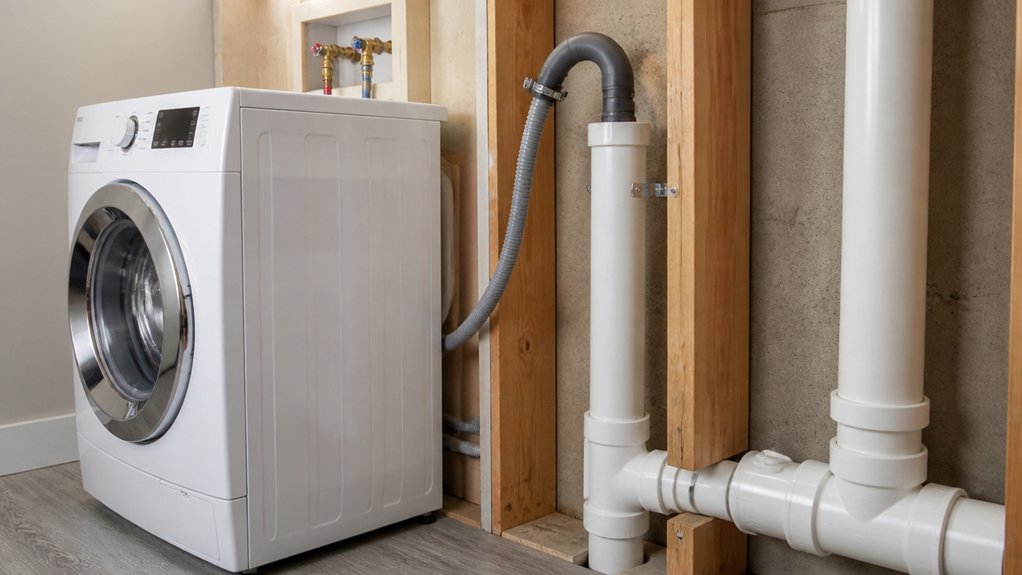
Yes, in most UK homes a washing machine drains into the foul waste system, which usually connects to the sewer line. You’ll usually find this setup in homes that meet current plumbing standards, so you’re in good company if yours does too.
Your machine sends used water away safely after each cycle, carrying laundry detergents and dirt into the drainage network. That’s normal, but you should still use the right dose of detergent to avoid excess suds and blockages.
In some homes, water recycling systems may collect greywater, but that’s less common and needs proper design. If you’re unsure, check your property’s waste setup or ask a qualified plumber.
You’ll save time and avoid problems by knowing how your home handles drainage.
How a Washer Drain Connects to Plumbing
Once you know your washing machine usually feeds into the foul waste system, the next step is understanding how that connection is made.
In your laundry room, you’ll usually see a standpipe, a trapped waste, or a spigot on a sink waste, all linked with a hose and clip. You push the washer’s drain hose into the fitting, then secure it so it can’t slip out when the pump runs.
In the UK, you should keep the pipework airtight enough to stop smells, yet open enough for fast discharge. Check that the hose rises before it drops, so water temperature changes and surges don’t strain the connection.
If you’re sharing a home, this setup helps everyone keep drainage tidy, safe, and compliant.
Where the Washer Drain Should Connect
Your washer drain should connect to a proper foul-water outlet, not a rainwater pipe. In most UK homes, that means a trapped standpipe, a sink waste with an appliance spigot, or a dedicated washing machine waste connection.
You should route the drain pipe into a fitting that’s sized for appliance discharge and supported securely to prevent movement. Keep the connection above the trap seal and make sure the venting system allows air in, so wastewater flows away cleanly without siphoning.
If your home already has a compliant waste point, use that rather than improvising with loose hoses or ad hoc fittings. When you connect it correctly, you protect your plumbing, stay in line with UK practice, and keep your laundry space working like it belongs in a well-run home.
Common Washer Drain Problems and Warning Signs
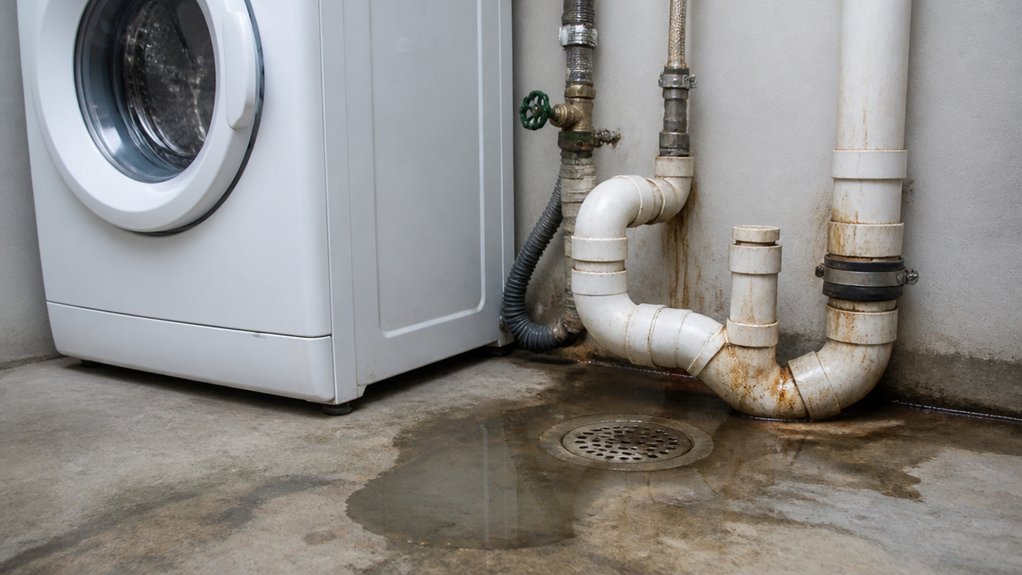
If the drain starts acting up, you’ll usually spot it quickly: water backing up into the machine, slow emptying, gurgling pipes, foul smells, or leaks around the hose and waste connection.
You may also notice damp flooring, repeated error codes, or a washer that leaves clothes wetter than usual.
In a UK home, these signs often point to a partial blockage, a loose trap, or an overworked standpipe.
Don’t ignore them; a small fault can spread mess through your laundry room organization and upset the whole household routine.
Keep an eye on water conservation tips too, because wasted rinse water can signal poor drainage as well as extra bills.
If the symptoms keep returning, get the connection checked promptly by a qualified plumber.
How to Prevent Washer Drain Backups
To prevent washer drain backups, keep the hose, trap, and standpipe clear and correctly fitted, because a poor setup is often the real cause of repeat problems. You should check for kinks, lint build-up, and overly long hose runs, then flush the drain with hot water if flow slows.
In many UK homes, a blocked sink branch or shared soil stack can affect your machine, so don’t ignore slow drainage elsewhere. Fit a mesh lint catcher and clean it often.
Good laundry room ventilation also helps reduce damp and mould around pipework. As part of your washer maintenance tips, run a hot service wash monthly and inspect seals, clamps, and connections.
If backups keep returning, call a qualified plumber before damage spreads.
About the Author


