

When you’re trying to identify an original Victorian fireplace, start with the materials and the fine details they reveal. Cast iron usually shows crisp lines, deep scrollwork, and sharp relief; marble feels smoother, with polished surfaces and restrained carving; tiled surrounds often use hand-painted or glazed patterns in balanced layouts. Repairs and restorations can blur the evidence, so you’ll need to know what to check next before you trust what you see.
Key Takeaways
- Cast iron Victorian fireplaces have dark, ornate surfaces with scrollwork, floral motifs, beaded borders, and crisp molded detail.
- Marble fireplaces are formal and polished, with smooth carving, reeded pilasters, fluting, deep veining, and refined proportions.
- Tiled fireplaces feature hand-painted or encaustic tiles with floral, geometric, or border patterns in rich Victorian colors.
- Check proportions, hearth, surround, and chimney details to see whether the fireplace fits the house’s original Victorian style.
- Authentic originals show age, soot wear, tool marks, and natural patina, while restorations often look too sharp or uniform.
What Makes Each Victorian Fireplace Different?
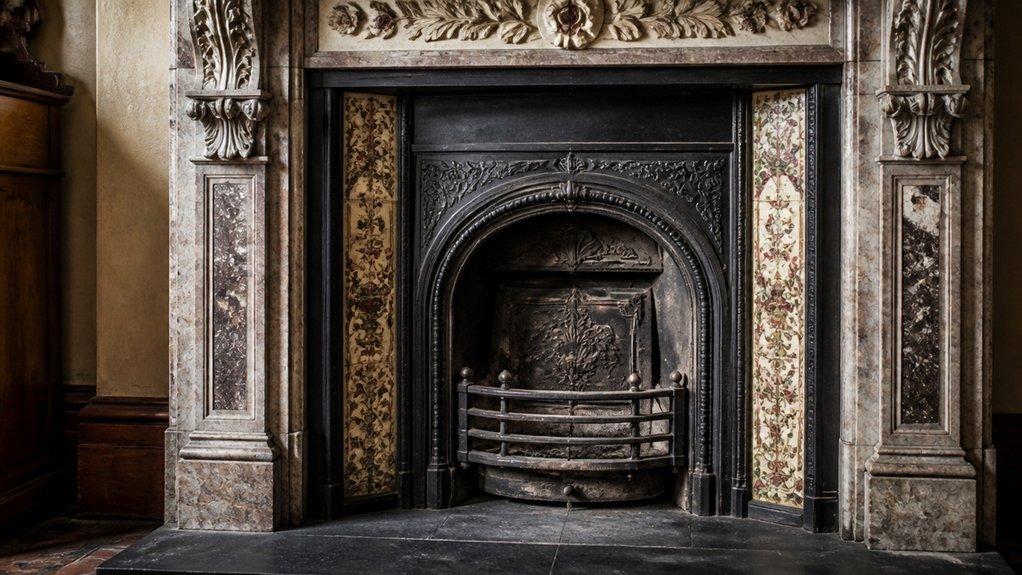
Victorian fireplaces differ mainly in their materials, ornamentation, and proportions, so you can usually identify the style at a glance. You’ll see cast iron versions with crisp lines, molded panels, and strong, dark presence.
Marble examples feel more formal, with smooth surfaces and carved details that signal Victorian craftsmanship.
Tiled fireplaces stand out through color, pattern, and glazed texture, often drawing from Architectural influences that you can trace in the surrounding room.
Pay attention to surround width, mantel height, and how much decoration the maker added.
If you want to belong to the right style group, compare the fireplace to the rest of the house, because each type fits a different level of finish and setting. That being the case, all reclaimed Georgian Fireplaces look stunning, once they are in place and cleaned up.
What Victorian Details Reveal the Era?
You can spot Victorian fireplaces by their ornate cast ironwork, which often adds bold pattern and fine detail.
Marble mantels show the era’s preference for formal, polished surfaces, while encaustic tile insets bring in color and geometric contrast.
Together, these features tell you the design favored craftsmanship, display, and decorative richness.
Ornate Cast Ironwork
Ornate cast ironwork often marks a Victorian fireplace by turning a simple opening into a display of craftsmanship. You can spot Victorian craftsmanship in crisp casting, repeated decorative motifs, and layered detail that frame the firebox.
Look for floral swags, scrolls, acanthus leaves, and geometric borders, all arranged to feel rich but balanced. These elements tell you the piece wasn’t meant to vanish into the wall; it was made to stand with pride.
If the iron feels heavy, sharply defined, and richly patterned, you’re likely looking at an original or faithful period design. When you recognize these features, you join the circle of homeowners who value authentic Victorian character and know how to read it well.
Marble Mantels
Marble mantels often extend the same Victorian attention to detail seen in cast ironwork, but in a quieter, more formal way. You’ll usually notice clean proportions, solid blocks, and refined edges that signal original period craftsmanship.
Study the marble veining: natural movement, color variation, and subtle irregularity often point to authentic stone rather than later replacements. Check the mantel carvings for floral motifs, scrolls, or crisp lines that suit the room’s scale.
Victorian owners wanted dignity as well as display, so these mantels feel balanced, not flashy. If you’re restoring one, match repairs to the existing finish and keep the surface honest. That helps you preserve the character that makes your home feel rooted in the era.
Encaustic Tile Insets
Encaustic tile insets often reveal a fireplace’s Victorian roots at a glance, especially when they frame the hearth with deep color, geometric borders, or repeating floral patterns. You’ll usually see these tiles set flush around cast iron or marble, creating a crisp visual edge that feels unmistakably period.
Look for muted reds, ochres, and blues, along with small repeating motifs that show Victorian craftsmanship at its most practical. If the tiles are hand-cut or slightly irregular, that’s another strong clue.
Unlike later Interior design trends, Victorian inserts valued durability and ornament in equal measure. When you spot intact encaustic tiles, you’re likely looking at an original feature, not a replacement.
Protect it, clean it gently, and let it anchor the room’s historic character.
How to Spot a Cast Iron Victorian Fireplace
You can spot a cast iron Victorian fireplace by its ornate iron detailing, including scrollwork, floral motifs, and crisp molded edges.
Check the hearth and surround for period clues like tiled inserts, decorative panels, and a sturdy, symmetrical layout.
If these features line up, you’re likely looking at an authentic Victorian piece.
Ornate Iron Detailing
When you inspect a cast iron Victorian fireplace, the ornate iron detailing usually gives it away. Look for deep relief patterns, leafy scrolls, beaded borders, and crisp symmetry. These features reflect Victorian architecture, where craftsmanship mattered and decoration signaled status.
You’ll often see repeated motifs around the opening, on the legs, and across the frieze, all cast as one solid piece. The surface should feel heavy and precise, not thin or stamped.
If the design looks bold yet balanced, you’re likely seeing an original or faithful period example. In interior decor, this kind of fireplace anchors a room and signals historic character.
Trust the ornament first: it’s the clearest clue that you’re standing in front of a true Victorian cast iron surround.
Hearth And Surround Clues
A cast iron Victorian fireplace also reveals itself through the hearth and surround, not just the decorative ironwork. You should look for a slate, tiled, or polished stone hearth that sits slightly proud of the floor, with a narrow cast surround framed by simple lines.
Original examples often keep their proportions tight, unlike later replacements that feel bulky or mismatched. Check whether the mantel shelf, tiles, and fireplace accessories belong to the same period, because good fit matters.
In many homes, you’ll also see clues in chimney construction: a shallow opening, soot staining, and a flue sized for an open coal fire. When these elements align, you’re likely looking at a true Victorian installation, and you can trust you’re in good company among informed period-home owners.
How to Recognize a Marble Victorian Fireplace
How can you spot a marble Victorian fireplace at a glance? Look for a heavy, polished surround with crisp edges, deep veining, and a cool, dense feel. Marble Victorian examples often use white, cream, or black stone, sometimes in contrasting pieces that frame the fire opening.
You’ll usually see refined carving: fluting, beads, reeded pilasters, or a modest shelf. The design feels formal, suited to a Victorian interior where symmetry matters.
If the fireplace still has matching hearth tiles or period fireplace accessories, that strengthens the case, but the marble itself does most of the identifying.
Check for wear at corners and subtle patina; genuine pieces show age without looking ornate. You’re not just seeing a surround—you’re seeing status, craftsmanship, and a room meant to belong to its original era.
How to Recognize a Tiled Victorian Fireplace
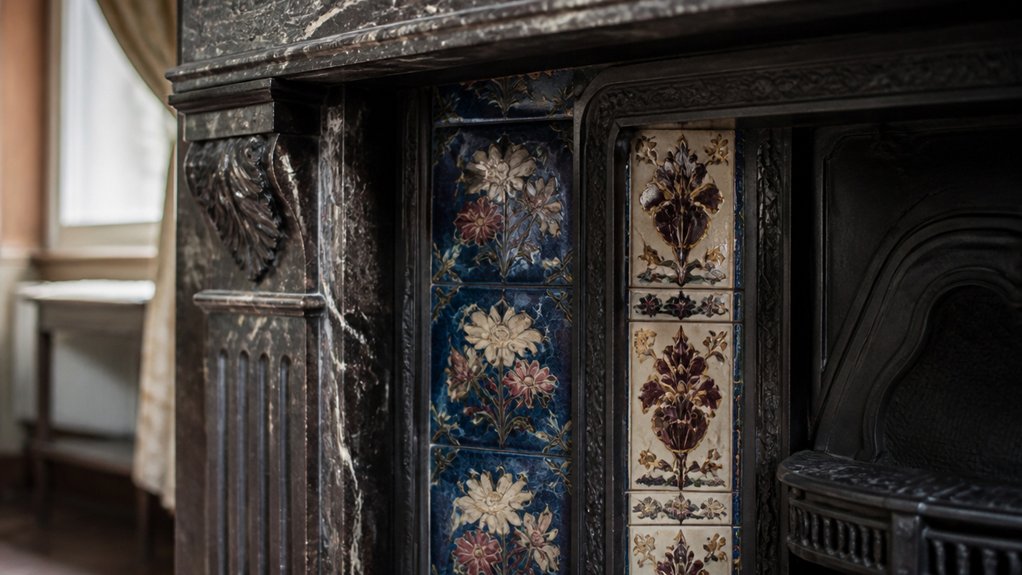
Tiled Victorian fireplaces usually stand out by their decorative surface as much as by their shape. You’ll often see hand-painted tiles, repeated floral motifs, geometric borders, or rich color blocks set into a framed surround.
In Victorian design, tiles weren’t just decoration; they signaled taste, status, and craft. Look for glazed finishes that reflect light and show slight variation from piece to piece, since older fireplace materials rarely look perfectly uniform.
You may also notice deep blues, greens, creams, or earthy reds arranged in balanced patterns. A tiled fireplace often feels orderly and domestic, fitting a room that values warmth and refinement.
If you’re comparing styles, trust the surface detail first: tile work usually tells you you’re looking at a true Victorian feature, not a later imitation.
What to Check in the Mantel, Insert, and Grate
Once you’ve checked the tilework, look closely at the mantel, insert, and grate, because these parts often reveal the fireplace’s true age and style.
Study the mantel craftsmanship first: Victorian examples often show crisp carving, turned details, or marble with clean, balanced proportions.
Then inspect the insert for cast-iron lines, floral motifs, and soot-worn edges that match the period.
The grate should fit the opening naturally, not sit awkwardly inside it.
Compare Grate patterns with known Victorian forms, especially arched fronts, scrollwork, or simple register grates.
If these elements feel unified in material and finish, you’re probably seeing an original ensemble.
Trust those details; they help you join the room’s history instead of guessing at it.
What Repairs Can Hide the Original Fireplace?
Even a well-kept fireplace can conceal its original form when later repairs have changed the visible surface. You’ll often see modern renovations that cover damage with fresh plaster, paint, or stone slips, and those fixes can mask cast iron, marble, or tiled details.
Repointing, patching, and replacement hearths may also alter proportions, making the surround look newer than it is. Watch for aesthetic concealment such as decorative cladding, boxed-in openings, or inserted panels that hide seams and joins.
These changes don’t always mean the fireplace is lost; they just mean you need to read the surface carefully. If you’re comparing houses in the same period, you’ll notice that repairs usually smooth out the texture and soften the sharp edges that originally gave Victorian fireplaces their character.
How to Spot a Restored Victorian Fireplace

A restored Victorian fireplace often looks cleaner and more complete than an original example, but you can still spot the work if you know where to look. Check for fresh mortar, overly sharp edges, and surface finishes that seem too uniform for age.
You may notice replacement tiles with brighter colors, newer castings, or marble that’s been polished beyond the soft wear Victorian homes usually show. Look for mismatched details around the surround, where historical restoration can preserve the general form while changing the character.
Skilled work respects artistic craftsmanship, yet repaired sections often repeat patterns a little too neatly. If the fireplace feels balanced but slightly new, you’re probably seeing careful restoration rather than untouched history.
How to Confirm Your Fireplace Style
To confirm your fireplace style, compare its key features against a few reliable references: the mantel shape, surround material, tile pattern, opening size, and decorative details.
Then match what you see with period catalogues, salvage listings, and trusted heritage guides. If your fireplace has a cast iron insert, marble slips, or hand-painted tiles, note whether those elements fit a consistent Victorian type.
You’ll strengthen Historical accuracy by checking proportions, tool marks, and original fixings, not just surface finish. If repairs exist, study how Restoration techniques may have altered edges, joints, or color.
When several details align, you can identify the style with confidence and join the community of owners who preserve these rooms with care.
About the Author