If you’re planning a bathroom renovation, start by looking at what’s actually failing in the space: cramped storage, poor flow, worn materials, and weak lighting. You can fix a tired bathroom without changing everything, but the right sequence matters. Smart layout choices, durable finishes, and cleaner lines often do more than a full overhaul. The real shift comes when each update starts working together.
Key Takeaways
- Set clear renovation goals, budget realistically, and confirm plumbing, electrical, and space constraints before starting.
- Improve layout and storage with better fixture placement, recessed niches, drawers, and hidden organizers.
- Choose durable, water-resistant materials like quartz, porcelain tile, and sealed stone for lasting performance.
- Upgrade lighting, fixtures, and finishes to create a brighter, more polished, and cohesive bathroom.
- Use space-saving designs, mirrors, and open surfaces to make small bathrooms feel larger and calmer.
How to Plan a Bathroom Renovation

Before you start tearing out tiles or shopping for fixtures, you need a clear plan for your bathroom renovation. Define your goals, set priorities, and decide what must change now versus later.
Strong budget planning keeps you grounded, so list every expected cost, add a contingency, and track spending as you go.
Next, handle contractor selection carefully: check licenses, compare quotes, ask for references, and choose someone who communicates clearly and respects your timeline.
Measure the space, confirm fixture sizes, and review plumbing and electrical limits before you commit.
When you plan with intention, you join the homeowners who avoid stress, waste less, and get results that feel right.
Improve the Layout and Add Smarter Storage
Once the plan is set, you can improve the layout by removing bottlenecks and making every inch work harder. Shift the vanity, toilet, or shower only if the change opens clear movement and better daily use. That’s layout optimization in practice: you create a room that feels natural, not cramped.
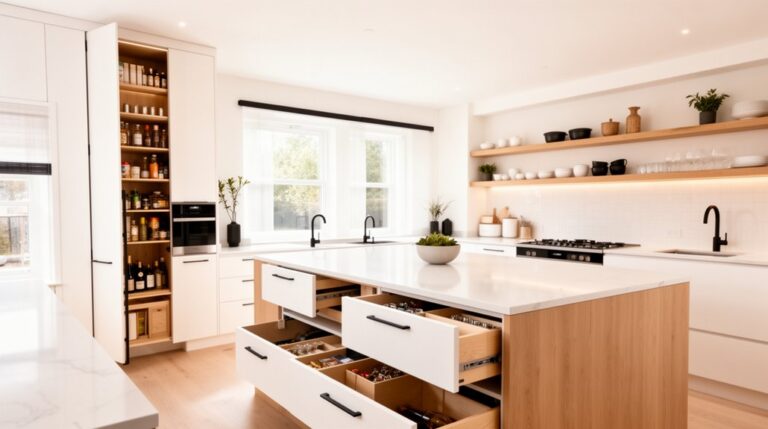
Add smart storage where you already reach, like recessed niches, vanity drawers, mirrored cabinets, and tall cabinets beside the sink. Keep counters clear so the space feels calm and shared. Use organizers inside drawers to separate essentials and cut clutter fast.
When you design for how you actually live, you’ll join the group of homeowners who get a bathroom that feels organized, welcoming, and easy to use every day.
Choose Bathroom Renovation Materials That Last
Choose materials that can handle water, heat, and daily wear, since durability matters as much as style in a bathroom. You’ll save time and money when you pick surfaces that resist stains, scratches, and swelling.
Look for durable countertops made from quartz, solid surface, or sealed stone, so your vanity stays strong through daily use.
For the floor, choose water resistant flooring like porcelain tile, luxury vinyl, or sealed laminate that can handle splashes without warping.
Keep grout, caulk, and edge seals high quality, because weak joints fail first.
When you invest in dependable finishes, you create a bathroom that feels polished, works hard, and helps you belong in a home that lasts.
Upgrade the Lighting, Fixtures, and Finishes

After the major surfaces are set, focus on the details that shape how the bathroom looks and functions every day. Start with lighting upgrades that layer brightness where you need it: at the mirror, over the shower, and on dimmers for evenings. Choose bulbs with a clean, natural tone so your space feels welcoming, not harsh.
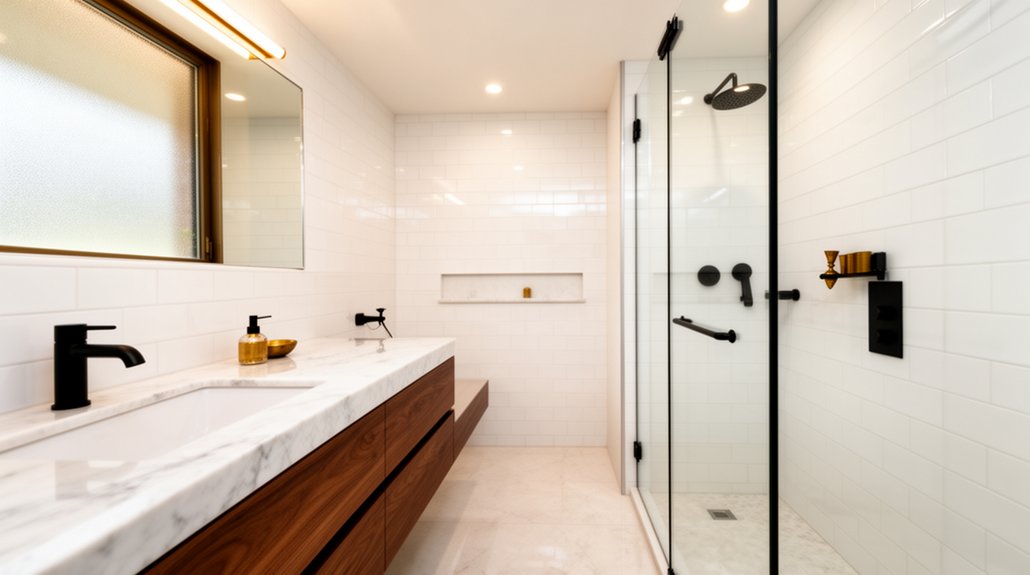
Then make fixture enhancements that match your style and hold up to daily use. A new faucet, showerhead, towel bar, and cabinet pulls can tie the room together fast.
Finish with durable touches like matte paint, sealed trim, and coordinated metal finishes. When you choose these elements with intention, you create a bathroom that feels polished, current, and comfortably yours.
Make a Small Bathroom Feel Bigger
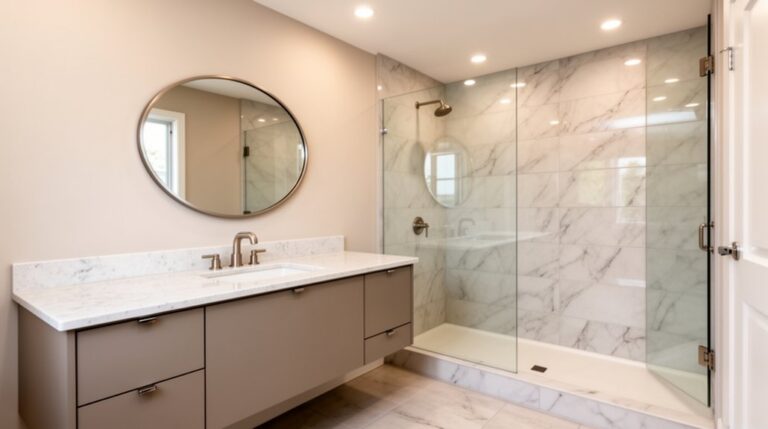
To make a small bathroom feel bigger, prioritize light, open, and uninterrupted surfaces. You can do that by choosing wall-mounted vanities, slim fixtures, and space-saving furniture that keeps the floor visible.
Use a calm, cohesive palette so every surface works together instead of competing. Large-format tiles reduce visual breaks, while glass shower panels keep sightlines open.
Add mirror enhancements to bounce light and expand the room’s depth; a wide mirror above the sink works especially well.
Store essentials in recessed niches or hidden drawers so counters stay clear.
Keep decor simple and functional, and choose finishes with a soft sheen.
When you strip away clutter, you create a bathroom that feels airy, polished, and easy to share.
About the Author