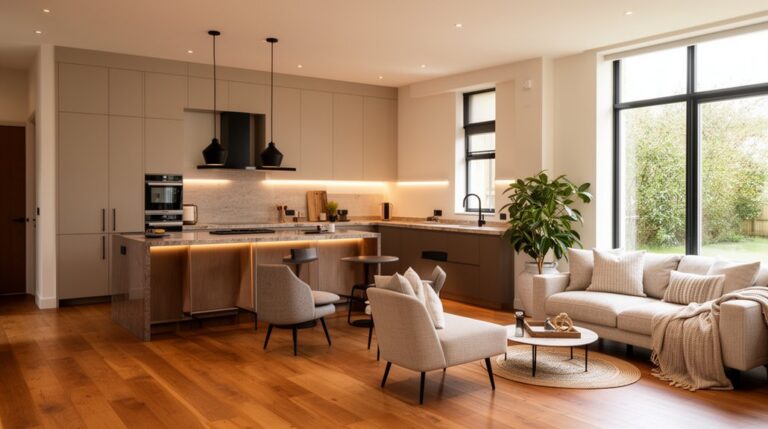

You’re seeing Newcastle climb your shortlist as prices remain below the UK average and entry points sit around £150k–£300k. You get solid yields above 6% in select postcodes, backed by steady demand and limited new supply. Jobs in healthcare and education anchor the market, while transport links widen your options. But affordability isn’t uniform, and some areas are tightening faster than others—so where do you actually gain the edge?
Key Takeaways
- Newcastle remains relatively affordable versus other UK cities, enabling first-time buyers to enter the market with lower deposits and borrowing requirements.
- Strong demand and limited housing supply create competition, pushing buyers to act quickly on realistically priced properties.
- Diverse property options between £150k–£300k offer accessible entry points, from flats to small family homes across multiple neighborhoods.
- Regeneration areas like Byker and Elswick attract buyers seeking value growth, supported by improving transport links and rental demand.
- Stable employment sectors, university retention, and cultural appeal sustain long-term demand, reinforcing confidence among first-time buyers.
Is Newcastle Still Affordable for First-Time Buyers?
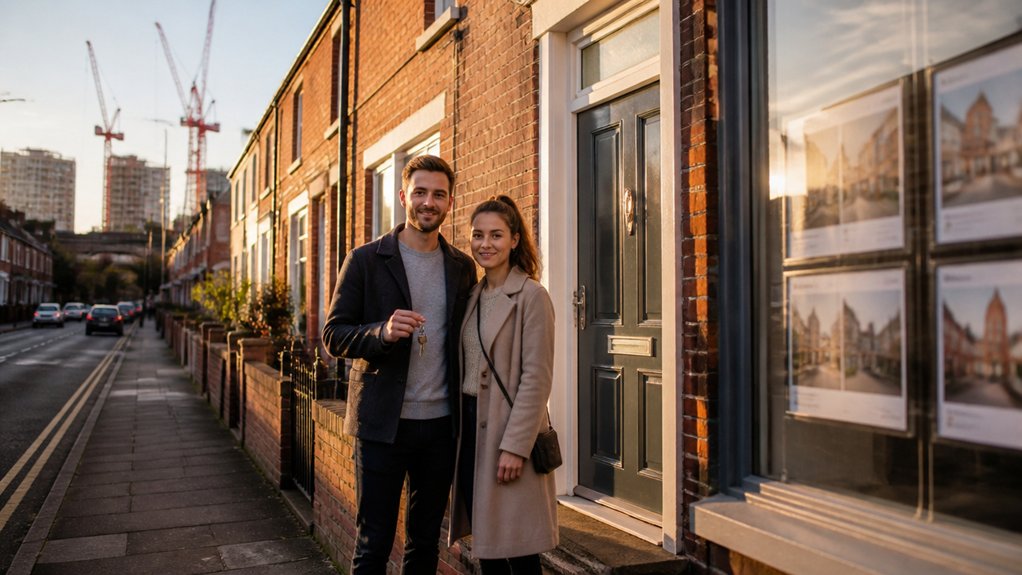
While Newcastle still sits below the UK’s average house price, the gap has narrowed enough that affordability depends heavily on your deposit and borrowing capacity.
You’ll find pockets of resilience in affordable neighborhoods like Byker and Walker, where entry-level flats remain accessible, but competition has intensified.
Mortgage rates, income multiples, and limited stock shape your property affordability more than headline prices.
New listings move quickly, so you need a clear budget, a realistic deposit—often 10–15%—and pre-approval to compete.
Target areas with strong transport links and regeneration signals, and you’ll anchor yourself in a community you can grow into without overextending.
Track sold prices, not just asking, and factor in energy ratings and service charges to keep monthly costs predictable and sustainable over time locally.
How Newcastle Prices Compare to Other UK Cities
Set against your budget constraints and fast-moving stock, Newcastle still prices competitively versus most UK cities: typical entry-level flats often land well below £150k, compared with £200k–£300k equivalents in Manchester, Leeds, or Birmingham, and far above that in London and the South East.
You’ll notice price per square foot tracks lower, giving you choice across central postcodes and suburbs. Even newer Luxury apartments come in at discounts to comparable northern cores, while character stock in Historic districts retains relative value without London-level premiums.
Transaction data shows tighter spreads between asking and achieved prices, signalling realistic pricing and less speculative heat. For you, that means clearer comparables, steadier competition, and a market where disciplined offers still land, especially if you move quickly and stay data-led.
What £150k–£300k Buys in Newcastle
At £150k–£300k, you’re typically looking at two- to three-bedroom terraces, Tyneside flats, or smaller semis, with stock varying by postcode.
In areas like Byker or Walker, your budget stretches to larger floorplans or upgraded interiors.
While in Jesmond or Heaton, you’ll trade size for location and proximity to amenities.
Expect 700–1,200 sq ft on average, with off-street parking, modest gardens, or recent refurbishments acting as key value drivers within this range.
Typical Property Types
Because Newcastle’s entry-level market still stretches further than most major UK cities, a £150k–£300k budget gives you access to a surprisingly broad mix of property types. You’ll typically choose between Tyneside flats within historic architecture, compact terraces, and newer apartments in modern developments.
At the lower end, expect one- or two-bedroom flats with solid rental yields and manageable service charges.
Moving toward £250k–£300k, you can secure three-bedroom terraces or well-specified city-centre apartments with parking and energy-efficient builds.
Layouts tend to prioritise usable space, and many properties have been updated, reducing immediate refurbishment costs and easing your evolution into ownership.
You’re buying into a market where stock turns quickly, so clear criteria and readiness to act help you compete confidently and secure the fit early.
Neighbourhood Price Differences
Where does your £150k–£300k budget stretch furthest across Newcastle?
In the West End, you’ll find lower entry points, with Benwell and Elswick reflecting softer market trends and stronger property investment yields.
Head east to Heaton or Sandyford, and prices tighten, driven by consistent demand and proximity to the city core.
Jesmond commands a premium, signalling established desirability and stable long-term performance.
Gosforth sits mid-to-upper range, where buyers compete for well-connected postcodes.
If you’re targeting value with growth potential, outer areas like Walker or Byker show evolving market trends and regeneration signals.
You align your budget with neighbourhood trajectories, balancing community fit and investment resilience.
Track micro-locations, compare recent sold prices, and watch rental demand to position yourself within Newcastle’s shifting buyer landscape confidently.
Size And Amenities
Once you’ve mapped price differences across neighbourhoods, the next question is what that budget actually provides you in regarding space and liveability.
At £150k, you’re typically securing a one- to two-bedroom flat, often 450–700 sq ft, with basic finishes but solid transport access.
Move toward £200k, and you’ll find larger layouts, modernised kitchens, and occasional parking, especially outside core Historic districts.
Closer to £300k, options expand into three-bedroom terraces or entry-level Luxury apartments, with 800–1,100 sq ft, en-suites, and energy-efficient upgrades.
You’re buying not just square footage, but access to cafés, green space, and community infrastructure that signals long-term value and everyday belonging.
Data shows average price per square foot rising 6–8% annually here, reinforcing competitive demand and limited, well-absorbed first-time buyer stock.
Which Newcastle Areas Offer Best Value

While price growth has accelerated across Newcastle, you’ll still find pockets of strong value by targeting areas where regeneration, transport links, and rental demand intersect.
You should focus on Affordable neighbourhoods like Byker, Elswick, and Walker, where average prices sit below city medians yet yields often exceed 6 percent. These districts show consistent sales volumes and improving stock quality, signalling credible Property investment opportunities without prime premiums.
You’ll also find value in Gateshead fringes such as Felling and Deckham, where entry prices remain accessible and refurbishment upside is quantifiable through recent comparables.
Prioritise streets with strong rental take-up, low vacancy, and listings turnover, so you join a market segment with liquidity, community stability, and clear pricing signals. That’s where your budget stretches further, sustainably.
How Jobs and Transport Affect First-Time Buyers
Affordability only gets you so far; job density and transport access ultimately determine whether a purchase works day to day and holds value.
In Newcastle, you track employment clusters around the city centre, hospitals, and universities, then map your work commute against reliable transportation infrastructure. Shorter commutes expand your viable catchment and reduce churn risk, supporting resale liquidity.
You should prioritize Metro coverage, bus frequency, and arterial road access when comparing neighbourhoods, because connectivity anchors tenant demand and owner satisfaction. If your role is hybrid, proximity to interchange nodes preserves flexibility as patterns shift.
You also benefit from walkable amenities that compress daily trips and strengthen your sense of place. Data shows properties near frequent transit outperform on time to sell and rent resilience.
Where Newcastle Is Becoming Less Affordable
Although Newcastle still undercuts many southern markets, you’ll see clear affordability compression in core, well-connected neighbourhoods where demand has outpaced supply.
You’re feeling it most in Jesmond, Ouseburn, and parts of Heaton, where price-per-square-foot growth now outpaces local wage gains.
Luxury apartments along the Quayside and new-build clusters near transport nodes command premiums that tighten entry-level options.
In Historic districts like Grainger Town, limited stock and conservation constraints keep supply thin, pushing competitive bidding.
You’ll also notice investor activity sustaining higher asking prices, reducing negotiation margins.
As a buyer, you’re competing for fewer realistically priced listings, so deposits stretch and time-on-market shrinks, especially within walkable, amenity-rich micro-locations that signal long-term desirability.
This creates a sense you must act quickly to secure a place here.
Will Newcastle Stay Attractive Long Term?

If you’re evaluating durability, Newcastle’s fundamentals still stack up: a diversified employment base anchored by healthcare, higher education, and professional services, plus ongoing inward investment tied to regeneration corridors along the Tyne. You’re buying into steady demand drivers, not short-term hype.
Graduate retention from Newcastle and Northumbria universities supports rental absorption and entry-level ownership transitions.
You’ll also see resilience in place-based appeal: historic landmarks, walkable quayside assets, and year-round cultural festivals sustain footfall and local spend.
Pipeline supply remains measured, with planning constraints limiting overbuild. Price-to-income ratios, while rising, still undercut many UK cores.
If you align with transport nodes and employment clusters, you’re positioning for stable liquidity and modest, incremental growth. That combination helps you feel rooted while preserving optionality for future moves.
About the Author