
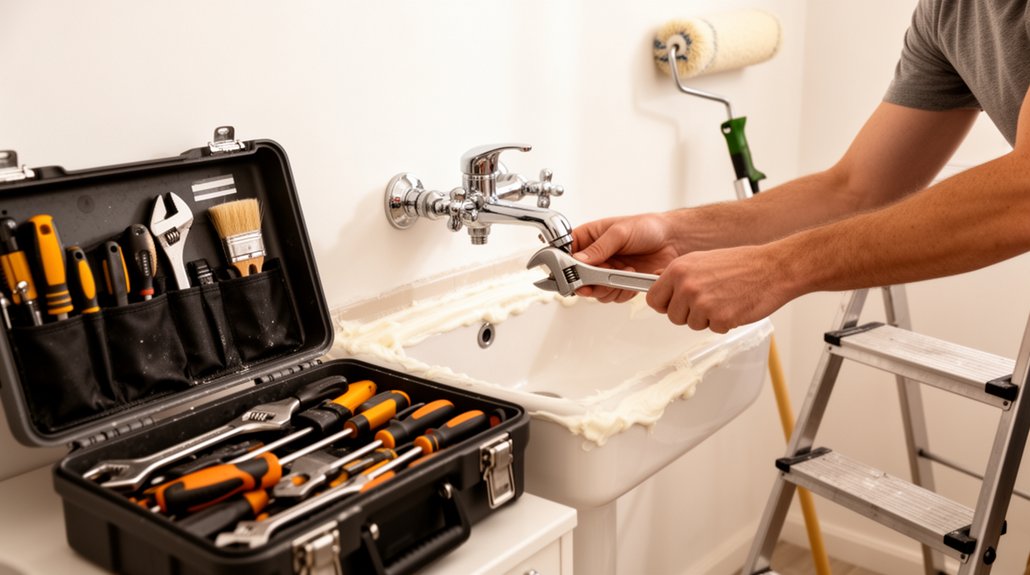
A small drip here or a loose hinge there can seem harmless, but they often point to bigger costs ahead. When you handle basic repairs early, you keep water damage, wear, and wasted energy from turning into expensive problems. You can fix leaky faucets, patch wall dings, tighten fixtures, and seal gaps before they grow teeth. A few simple checks now can protect your home and your budget in ways that aren’t obvious at first.
Key Takeaways
- Fix small issues like loose hardware, scuffed walls, and squeaky doors before they become expensive repairs.
- Repair leaks and clogged drains quickly to prevent water damage and plumbing emergencies.
- Patch holes, dents, and nail marks early to protect walls and avoid larger drywall repairs.
- Maintain caulk and sealant around tubs, sinks, and windows to block moisture and prevent rot.
- Perform regular home inspections and minor maintenance to extend fixture life and reduce long-term costs.
Spot Easy DIY Home Repairs First

Start by looking for the small fixes you can handle yourself, since basic repairs often save time and money. You can spot easy DIY home repairs by checking for loose hardware, scuffed walls, squeaky doors, and worn caulk. Handle painting touch ups before chips spread and make the room feel neglected.
Try appliance troubleshooting when a machine acts up, but only if you can safely reset, clean, or replace a simple part. Keep a basic toolkit nearby so you’re ready when something breaks.
When you fix small issues early, you protect your home, stretch your budget, and stay in control. You’re not alone in this; every homeowner builds confidence by tackling one manageable repair at a time.
Fix Leaky Faucets Before Bills Rise
Start by spotting where the drip’s coming from, since even a small leak can waste water fast.
Then replace worn washers and tighten any loose parts so the faucet seals properly again.
After the repair, check your water meter to confirm the leak’s stopped and your bills won’t climb.
Spot Drip Sources
Where’s that drip coming from? You can spot drip sources fast by drying the faucet, sink rim, and shutoff valves, then watching for fresh moisture.
Use simple leak detection: place a paper towel under connections, listen for ticking, and check after each use.
If water gathers at the spout, handle, base, or under the sink, you’ve found the problem area.
Tighten visible fittings only if they feel loose; don’t overtighten and crack parts.
Mark the exact drip source so you can fix it before your bill climbs.
When you know where the leak starts, you save water, protect cabinets, and keep your home running smoothly with less stress.
That’s the kind of smart upkeep neighbors respect.
Replace Worn Washers
If the faucet still drips after you’ve found the source, a worn washer is often the culprit. Shut off the water, remove the handle, and inspect the washer for cracks, flattening, or grit.
Swap it for a matching part, then reassemble the faucet snugly, not forcefully. This simple fix is a core part of washer maintenance and keeps a small leak from becoming a bigger repair.
You don’t need special skills—just a steady hand and the right size wrench. If the valve seat looks rough, clean it before installing the new washer.
In appliance troubleshooting, replacing the washer is one of the fastest ways to stop wasted water, protect fixtures, and lower your bill. Stay on top of these repairs, and you’ll keep your home in good shape.
Check Water Meter
Wondering whether that drip is really costing you? Check your water meter before and after a period when no one uses taps, toilets, or appliances. If the meter changes, you’ve likely got a leak that’s raising your Water usage.
Record Meter readings in the morning, then again after a few hours or overnight. Compare the numbers and watch the sweep indicator if your meter has one. This quick test helps you catch hidden leaks early, so you can fix a worn faucet, loose connection, or running toilet before the bill climbs.
You’re not just protecting your home; you’re joining smart homeowners who keep costs in check. Make this habit monthly, especially if you’ve noticed damp spots, sounds of water, or a sudden spike in charges.
Patch Small Wall Damage Early
Small wall damage can turn into a bigger repair fast, so patch chips, nail holes, and small dents as soon as you notice them. You’ll keep your rooms looking cared for and protect your budget with simple wall patching.
Clean the spot, fill it with spackle, smooth it level, and let it dry before sanding lightly. Then touch up the area with matching paint so the fix blends in.
Acting early supports damage prevention because small flaws don’t have time to spread or invite bigger repairs. Keep a putty knife, sandpaper, and a small tub of filler on hand so you can handle repairs quickly.
When you stay on top of minor blemishes, your home feels well kept and you stay part of the group of homeowners who save money wisely.
Tighten Loose Fixtures Before They Worsen
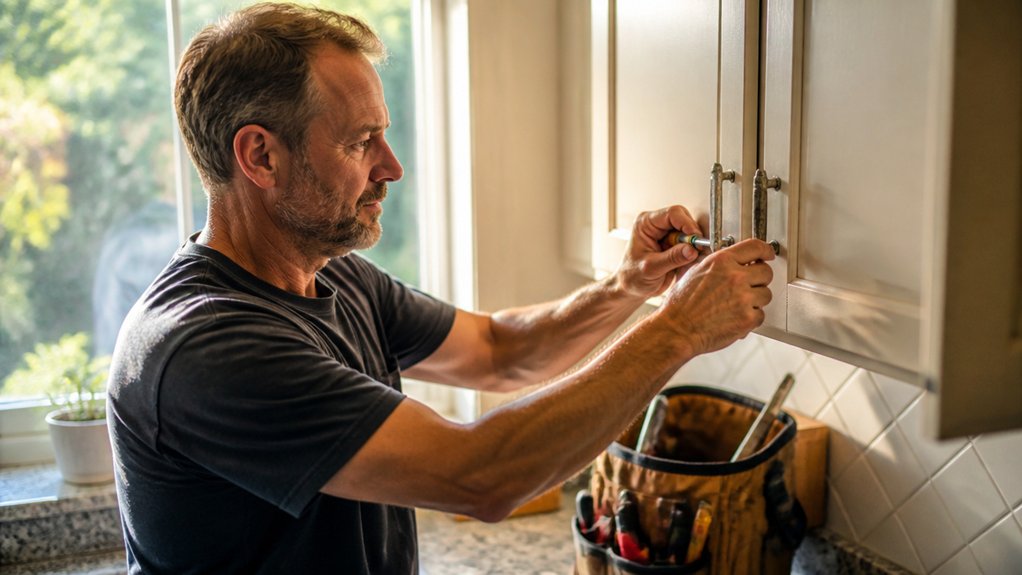
Check loose fixtures as soon as you notice wobbling, shifting, or gaps. Tightening them early helps you stop minor issues from turning into damaged walls, stripped screws, or broken fittings.
A quick fix now can save you from costly repairs later.
Detect Early Looseness
Loose fixtures rarely stay minor for long, so tighten them as soon as you notice a wobble or gap. Walk through your home and check cabinet handles, towel bars, light switches, and stair rails. If something moves under light pressure, act now. You’ll catch small wear before it turns into a loose hinge, a noisy panel, or a sensor malfunction that points to overlooked stress.
Watch for uneven gaps, fresh squeaks, or pieces that no longer sit flush; these often signal structural shifts or aging fasteners. Keep a screwdriver and wrench handy, and make this quick inspection part of your routine.
When you fix looseness early, you protect your space, keep your home feeling solid, and stay part of the group that handles repairs before they become expensive.
Prevent Costly Damage
A loose fixture can turn a simple fix into a costly repair if you leave it alone. You should tighten handles, hinges, faucets, and electrical plates as soon as they wobble. Doing this early helps you stop leaks, wall damage, and wear that can spread fast.
When you keep small problems in check, you protect your budget and your home’s value. You also reduce the chance of insurance claims tied to preventable damage.
If a fixture keeps loosening, check for stripped screws, hidden rot, or misalignment. That’s when professional inspections matter. A trained eye can spot the issue before it becomes a bigger repair.
Stay on top of these tasks, and you’ll fit right in with smart homeowners who save money over time.
Clear Clogged Drains Before Damage Spreads
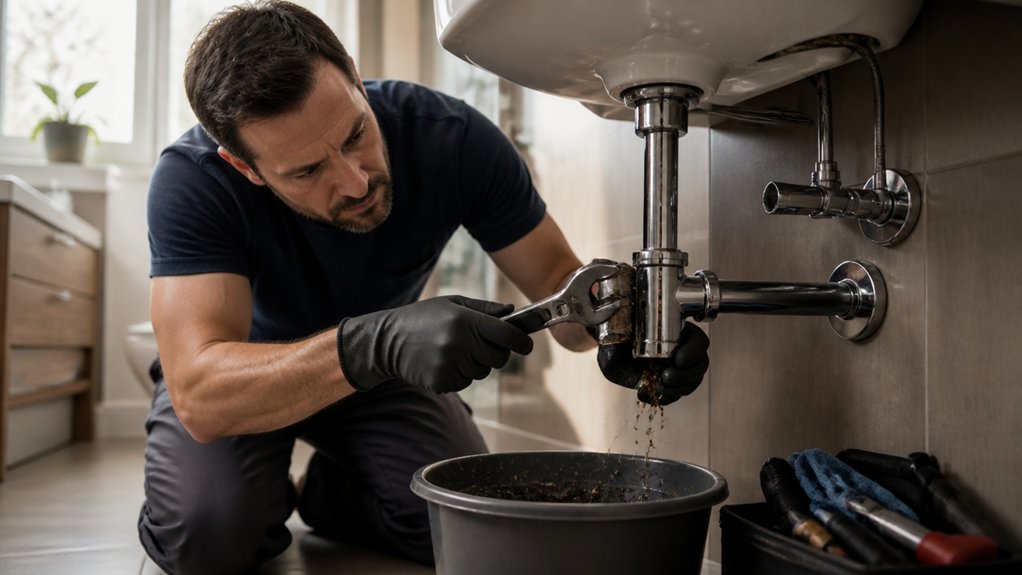
When water starts draining slowly, you need to act fast before a small clog turns into a bigger plumbing problem. Clear the drain with a plunger or a simple drain snake, and remove hair, grease, and soap buildup before they harden.
For drain prevention, flush sinks with hot water and use strainers in every basin. Good clog prevention also means you skip pouring oil down the drain and wipe food scraps into the trash.
If the clog keeps returning, you may have a deeper issue that needs attention. Taking care of it early helps you protect your home, avoid water damage, and save on repair bills.
You’re not just fixing a nuisance—you’re keeping your household running smoothly together.
Fix Squeaky Doors and Windows
If a door or window starts squeaking, you can usually fix it quickly before the noise gets worse. Check the door hinges first. Tighten any loose screws, then apply a small amount of lubricant to the hinge pins and work the door back and forth. Wipe away extra oil so dust won’t collect.
Do the same for window latches and moving parts, since friction often causes the noise. If a hinge or latch stays noisy, remove it, clean off grime, and reinstall it firmly.
You don’t need special tools, just a screwdriver and a steady hand. When you handle these small fixes early, your home stays quieter, your hardware lasts longer, and you keep control of simple costs.
Seal Small Caulk Gaps Before Moisture Enters
Small caulk gaps can let moisture slip into seams around tubs, sinks, windows, and trim, so inspect them early and reseal any openings you find. You don’t need to be a pro to handle this job; a caulk gun, matching sealant, and a damp cloth usually do the trick.
Cut away loose material, clean the joint, and apply a smooth bead so it bonds well. Press it in, then wipe the edge for a neat finish that looks like you know what you’re doing.
This simple repair supports moisture prevention, helps you avoid rot and mildew, and keeps your home feeling cared for. When you stay ahead of small caulk gaps, you protect your space and save money together.
About the Author


