
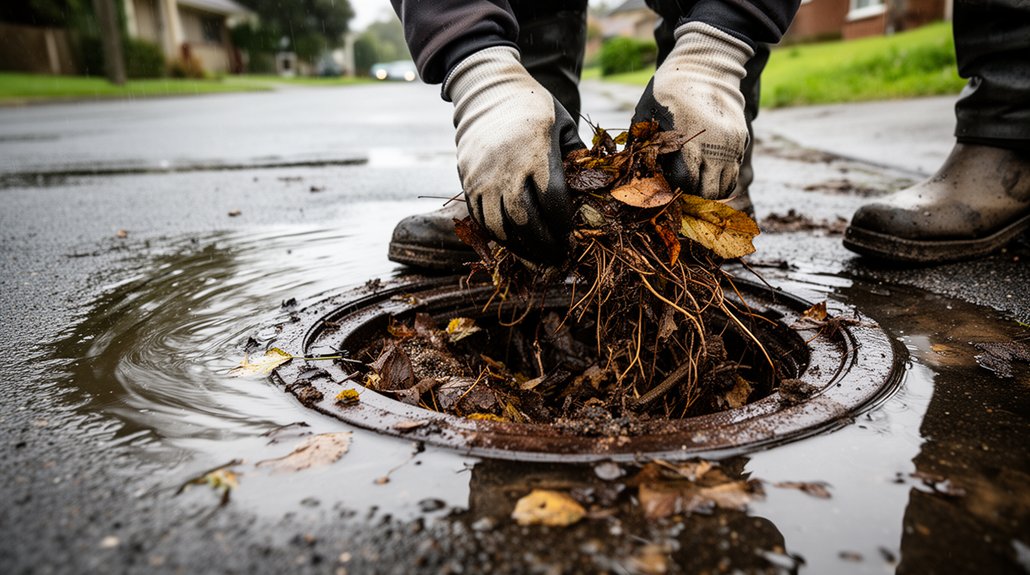
Like a slow-moving tide where it shouldn’t be, a blocked stormwater drain can turn a small shower into a costly problem. You can spot trouble early when water pools, drains slowly, or backs up near grates. Clear debris safely from the outlet toward the inlet, but don’t force a stubborn blockage deeper. If the water still won’t move, you’ll need to know what’s causing it—and what to do next.
Key Takeaways
- Look for signs like pooling water, slow drainage, gurgling pipes, or overflow near grates and kerbs.
- Common causes include leaves, soil, litter, roof grit, tree roots, and damaged or poorly sloped pipes.
- Clear small blockages safely by wearing gloves, removing grates, and scooping debris from the drain.
- Flush the drain with short hose bursts, but stop if water backs up or the blockage worsens.
- Call a professional if the drain stays blocked, floods toward property, or shows signs of hidden damage.
Signs Your Stormwater Drain Is Blocked
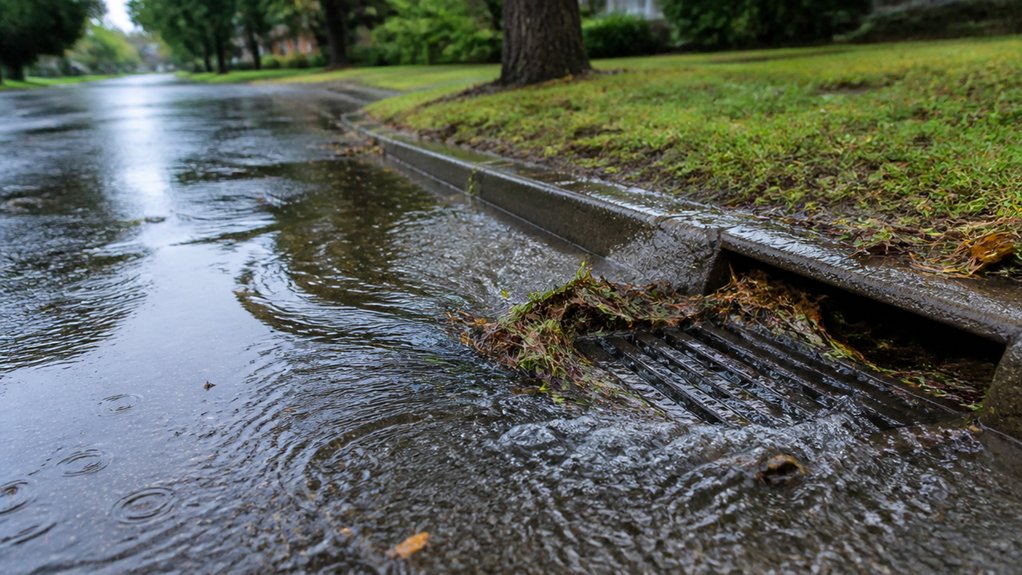
If your stormwater drain is blocked, you’ll usually notice water pooling around grates, slow drainage after rain, or gurgling sounds coming from the pipes. You may also see damp patches, surface runoff that lingers, or overflow near kerbs and driveways. These signs tell you the system isn’t moving water as it should.
In well-managed urban planning, drains protect homes, streets, and shared spaces from flooding. When they’re struggling, the environmental impact can spread quickly, affecting gardens, pathways, and nearby waterways.
Trust what you see and hear; these early warnings matter. If you notice them, you’re not alone, and acting early helps keep your property safer and your neighbourhood working properly.
Common Causes of Stormwater Drain Blockages
Stormwater drains usually block when debris builds up faster than water can carry it away. You’ll often find leaves, twigs, soil, litter, and roof grit settling in grates and pipes.
After storms, Stormwater debris can wash in from lawns, driveways, and gutters, while tree roots may creep into joins and trap more material.
In older systems, broken pipes and poor slopes slow flow and let sediment settle. If you live in a leafy street or near worksites, you’re more likely to see buildup.
Regular Drainage maintenance helps you stay ahead of these issues by keeping channels clear and spotting trouble early. When you understand the common causes, you can protect your place and keep your stormwater system working as it should.
How to Clear a Blocked Stormwater Drain Safely
Before you start, shut off any nearby power, wear gloves and sturdy shoes, and check the drain for visible hazards so you can work safely. Then remove grates or covers with the right tools, and clear leaves, mud, and debris by hand or with a small scoop.
For drain cleaning, work from the outlet toward the inlet so you don’t push the blockage deeper. Flush the drain with a hose in short bursts to test flow, and stop if water backs up fast.
Keep your safety precautions simple: stay clear of moving water, avoid sharp tools, and don’t force anything that could damage the pipe. You’re not just fixing a drain—you’re protecting your home and your street.
When to Call a Stormwater Drainage Professional
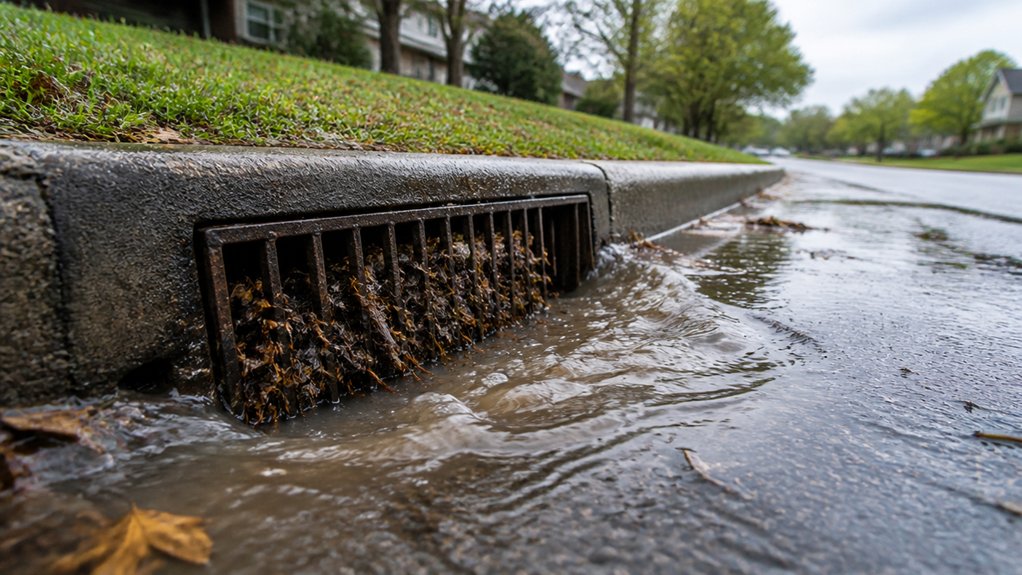
When the drain still won’t clear after basic cleaning, it’s time to call a stormwater drainage professional. You should also reach out if water backs up fast, flooding spreads toward your home, or you hear gurgling in multiple outlets.
A pro can inspect hidden damage, clear deep blockages, and restore safe flow without guessing. This matters when your property’s urban landscaping channels heavy runoff through narrow drains, or when emergency preparedness depends on keeping access routes dry during storms.
You’re not overreacting by asking for help; you’re protecting your place and your neighbors. If the problem keeps returning, the issue may be beyond surface debris. A qualified technician can identify the cause and give you a clear plan.
How to Prevent Stormwater Drain Blockages
To keep stormwater drains clear, you need to stop debris before it builds up. You should sweep gutters, clear grates, and trim nearby trees so leaves and litter don’t wash into the system. Check for sediment after heavy rain, then remove it quickly. Keep oil, paint, and yard waste out of the drain; they clog pipes and hurt water quality.
If you live in a shared property, join your neighbours in routine inspections so everyone protects the same urban drainage network. Install mesh guards where needed, and direct soil away from drains during landscaping.
Good habits also support stormwater recycling by keeping runoff cleaner for reuse. Stay consistent, and you’ll reduce blockages, avoid costly repairs, and help your community handle storms with confidence.
About the Author