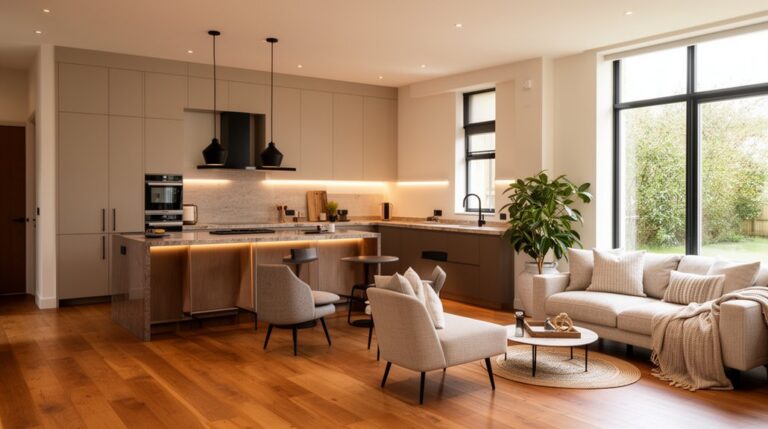
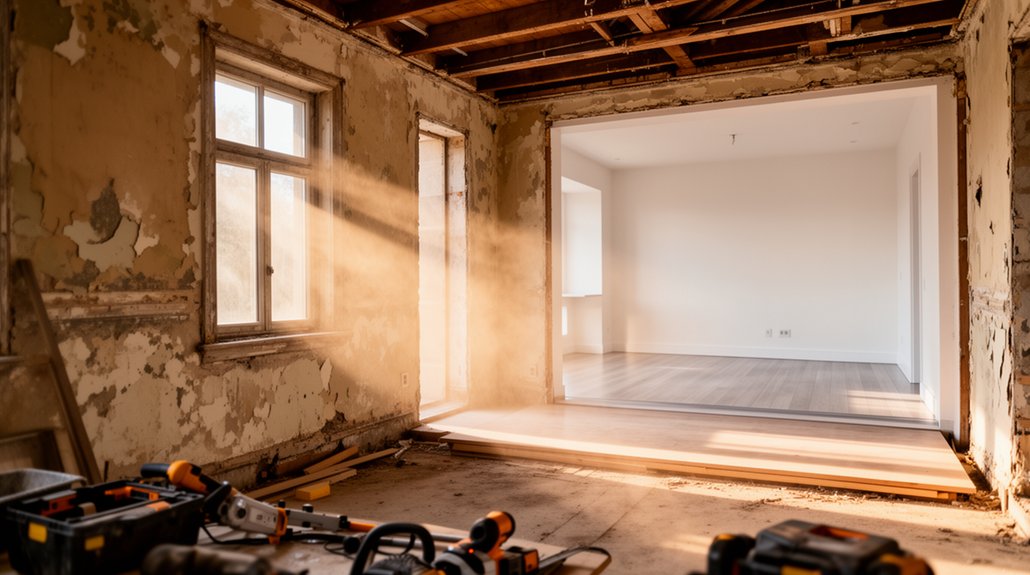
Transforming tired properties can be profitable! You walk through a dated three-bed in Phoenix listed $80K under comps, with worn cabinets and a failing roof, and you know there’s margin if you move precisely. You assess structure, layout, and neighborhood standards fast, then map targeted upgrades that buyers will pay for. Every decision ties to ROI, timelines, and risk control—and the difference between profit and regret starts here…
Key Takeaways
- Target undervalued properties in strong neighborhoods with cosmetic issues and clear resale demand to maximize upside and minimize structural risk.
- Validate deals with conservative comps, full cost analysis, and confirmed zoning and permits to avoid costly surprises.
- Focus renovations on high-impact areas like kitchens, bathrooms, and curb appeal aligned with buyer expectations and neighborhood standards.
- Control budgets tightly by setting spending caps, sequencing work efficiently, and managing contractors with clear scopes and milestone-based payments.
- Price and stage strategically to match market demand, create urgency, and ensure quick resale within your projected holding timeline.
How to Spot Profitable Fixer-Uppers Fast

When you’re scanning the market for a profitable fixer-upper, start by zeroing in on properties priced noticeably below comparable homes in the same area, because that gap is where your margin lives. You’ll move faster when you track market trends blockwise and prioritize property location with stable demand, access, and resale appeal.
Look for cosmetic distress, outdated layouts, or deferred maintenance that signals opportunity without structural uncertainty. Scan days-on-market, price cuts, and rental comps to confirm liquidity.
Build a shortlist, walk it with a contractor mindset, noting scope, permits, and timeline. Stay inside neighborhoods you understand, where buyers like you already transact.
Align with local agents and wholesalers so you hear about inventory early and feel part of the deal flow, not chasing it.
Evaluate Deals: What Makes a Flip Worth It
What actually makes a flip worth the risk and effort? You judge deals by alignment with current demand, not just price. Market timing shapes buyer urgency, days on market, and exit confidence. You look for neighborhoods where comparable homes are moving quickly and upgrades match buyer expectations. If the asset fits that flow, you’re closer to a worthwhile flip.
You also weigh control: clear scope, predictable permits, and reliable trades. Financing options must fit your pace and risk tolerance without squeezing margins. You prioritize properties where smart improvements unlock visible value fast, and where your team can execute cleanly.
When the market, asset, and execution line up, you belong in that deal and stay disciplined as conditions shift around you in real time daily.
Run the Numbers Before You Buy
Before you commit, you need to run tight deal analysis grounded in current market comps and realistic timelines.
Break down every cost—acquisition, rehab, holding, financing, and selling—so you’re not guessing where your margins stand.
Then project your profit with conservative assumptions to confirm the deal still works when numbers tighten.
Deal Analysis Basics
Although a property might look like a bargain on the surface, you don’t have a deal until the numbers prove it. You start with local Market trends, checking demand, inventory, and days on market.
Property valuation comes next; you compare recent comps, adjust for condition, size, and location, and stay conservative.
You verify zoning, title, liens, and permits so surprises don’t erode your position.
You assess neighborhood signals—schools, safety, access—because buyers will.
You confirm exit fit with your strategy and timeline.
Finally, you document assumptions and keep discipline; if key inputs don’t align, you walk away with the group that plays it smart.
Stay data driven, compare multiple scenarios, and rely on consistent criteria so every deal meets your standards and strengthens your portfolio.
Cost And Profit Projections
Once your deal checks out on paper, you turn those assumptions into a clear cost and profit model that holds up under scrutiny. You itemize acquisition, rehab, carrying, and selling costs, then stress test them against realistic comps and Market timing. Build in contingencies, because surprises aren’t optional in this business.
Compare multiple Financing options, factoring rates, fees, and draw schedules into your cash flow. You track holding periods, interest accrual, and exit pricing to see your true margin, not a hopeful one. If the spread tightens below your target, you renegotiate or walk.
When numbers align, you move with confidence, knowing your plan fits the market and your community of disciplined investors. Stay disciplined, document assumptions, and revisit projections as conditions shift quickly.
Check Permits, Zoning, and Legal Risks Early
Before you commit capital, you need to verify zoning restrictions to confirm your planned use, density, and exit strategy align with local rules.
You should also review the property’s permit history to spot unpermitted work, open violations, or costly compliance issues that can erode margins.
Catching these legal risks early helps you price accurately, avoid delays, and protect your projected ROI.
Verify Zoning Restrictions
If you want to protect your margins, verify zoning and permit requirements as early as possible. You need clear zoning compliance before underwriting scope, density, and use.
Confirm restriction enforcement patterns, overlays, setbacks, parking ratios, and occupancy limits with the municipality. Model costs for variances, hearings, and redesigns, and price in time risk.
Align your plan with what’s allowed, not what you hope to win. Early certainty keeps your bid disciplined and your exit comps defensible within your market cohort.
Flag nonconforming uses, grandfathered rights, and conditional approvals that could constrain value. Coordinate with local planners and seasoned brokers so you move like insiders, not outsiders.
That shared discipline builds trust and keeps deals bankable. Document assumptions clearly to avoid surprises at closing timely.
Review Permit History
While you’re underwriting scope and timeline, pull the full permit history to see what was actually approved, built, and signed off. Compare plans to current conditions, flag unpermitted additions, and quantify cure costs before you bid. You’ll avoid surprises that erode margin and schedule.
Check inspection records, certificates of occupancy, and any open or expired permits that could stall closing or resale. Confirm zoning alignment with prior approvals and intended use, and verify contractor licensing where applicable.
Tighten your budget with realistic remediation line items and contingencies tied to risk. By prioritizing legal compliance early, you protect financing, insurance, and exit velocity, and you operate like the disciplined investors you’re competing with in this market.
Document everything to support pricing, disclosures, and negotiations confidently.
Plan High-ROI Renovations Buyers Want
How do you decide which upgrades will actually move your resale price, not just your budget? You start with comps, buyer profiles, and neighborhood expectations, then target features that consistently command premiums.
Prioritize kitchens and baths with durable finishes, efficient layouts, and neutral palettes that photograph well. Add outdoor landscaping for curb appeal that signals care before buyers step inside.
In older areas, respect historic preservation by restoring original details while integrating modern systems buyers expect. Focus on lighting, storage, and energy efficiency, since they influence perceived value and inspection outcomes.
You’re not chasing trends; you’re aligning improvements with what your market already rewards, so your project feels right at home and sells with confidence.
Lean into buyer feedback from showings and agent insights.
Budget Renovations Without Cost Overruns
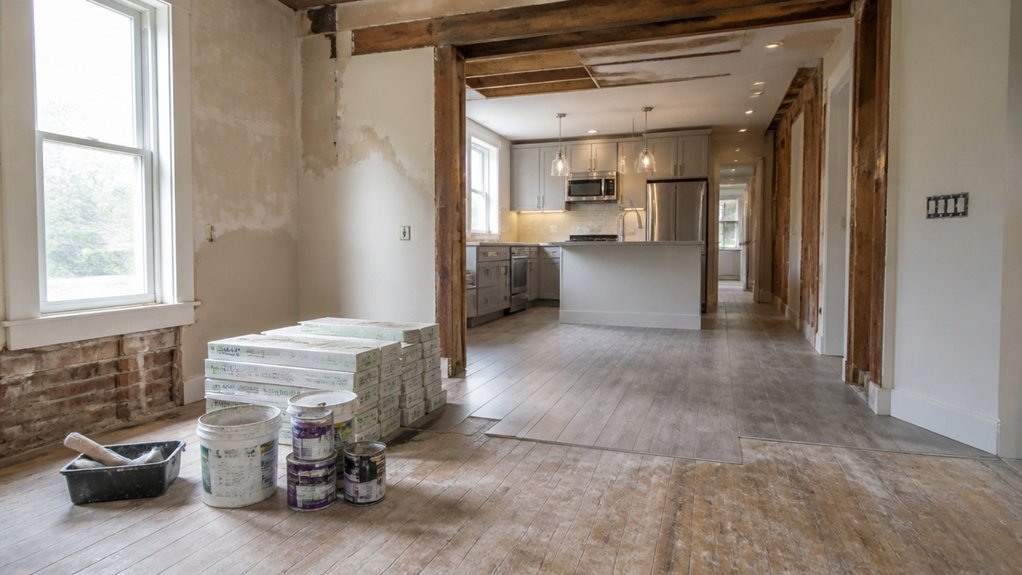
Where do renovation budgets most often go off track? You underestimate scope, skip disciplined Budget planning, and let small upgrades compound into costly drift.
You stay aligned with market comps, set hard caps by room, and track spend daily. Define must-haves versus nice-to-haves, then lock specifications before work begins. Contingencies should be lean but real, tied to property condition, not guesswork.
You control costs through sharp Material sourcing and timing. You compare suppliers, negotiate bulk pricing, and choose durable finishes that mirror buyer expectations without overbuilding. Sequence tasks to avoid rework, protect margins with change-order rules, and document every purchase.
When surprises appear, you adjust scope, not standards, keeping the project competitive and profitable within your target resale window for consistent, repeatable investor results.
Hire a Reliable House Flipping Team
Because execution speed and workmanship directly impact resale value, you need a tight, accountable team you can trust from day one. Start with disciplined contractor selection, verifying licenses, insurance, references, and recent comps-aligned scopes.
Build clear roles, schedules, and cost controls so every trade knows targets and constraints. Prioritize team collaboration through weekly site meetings, shared budgets, and punch-list tracking that prevents rework.
Negotiate fixed bids where possible, tie payments to milestones, and document change orders tightly to protect margins. Choose crews who communicate early, flag risks, and own outcomes, because reliability compounds across the entire flip lifecycle.
Keep a vetted bench for surge capacity, reward performance, and replace underperformers fast to keep timelines tight and buyers confident in your finished product quality standards.
Stage and Price Your Flip to Sell Fast
With a reliable team delivering a clean, on-scope finish, your next lever is positioning the property to attract offers quickly and at the right price point. You align pricing with current market trends, studying comparable sales, days on market, and buyer demand to avoid leaving money or time on the table.
Then you apply targeted staging techniques that highlight flow, light, and functionality while keeping costs disciplined. Neutral palettes, scaled furnishings, and strategic accents help buyers see themselves in the space.
You also refine listing photos and timing to match peak traffic windows. When your pricing and presentation work together, you create urgency, strengthen perceived value, and move your flip with confidence.
You stay disciplined on spend, tracking returns from visual and pricing decision.
Common House Flipping Mistakes to Avoid
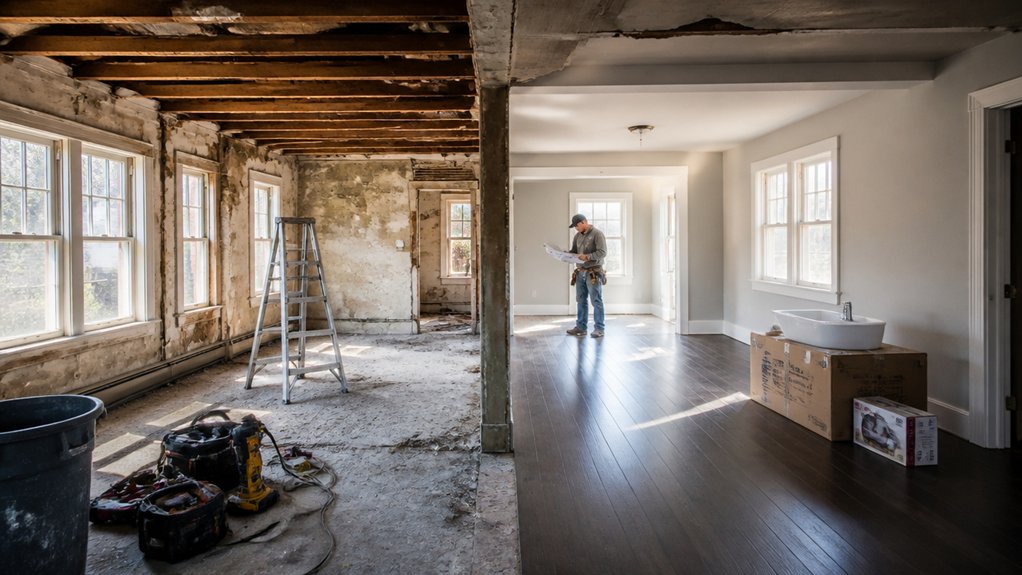
While strong pricing and presentation can accelerate a sale, avoidable missteps can still erode your margin and stall your timeline. You can’t ignore the property market’s signals or chase renovation trends that don’t fit your buyer pool.
Overimproving beyond neighborhood comps ties up capital, while underestimating holding costs quietly eats profit. You should scope rehab with precision, lock contractor bids, and build contingencies for delays.
Skipping permits or inspections may seem faster, but it risks costly rework and buyer distrust. Stay disciplined with your numbers, track every expense, and adjust quickly as conditions shift.
When you align upgrades with demand and protect your budget, you stay competitive and move confidently within your investing community. Focus on realistic timelines, financing costs, and exit strategy clarity.
About the Author